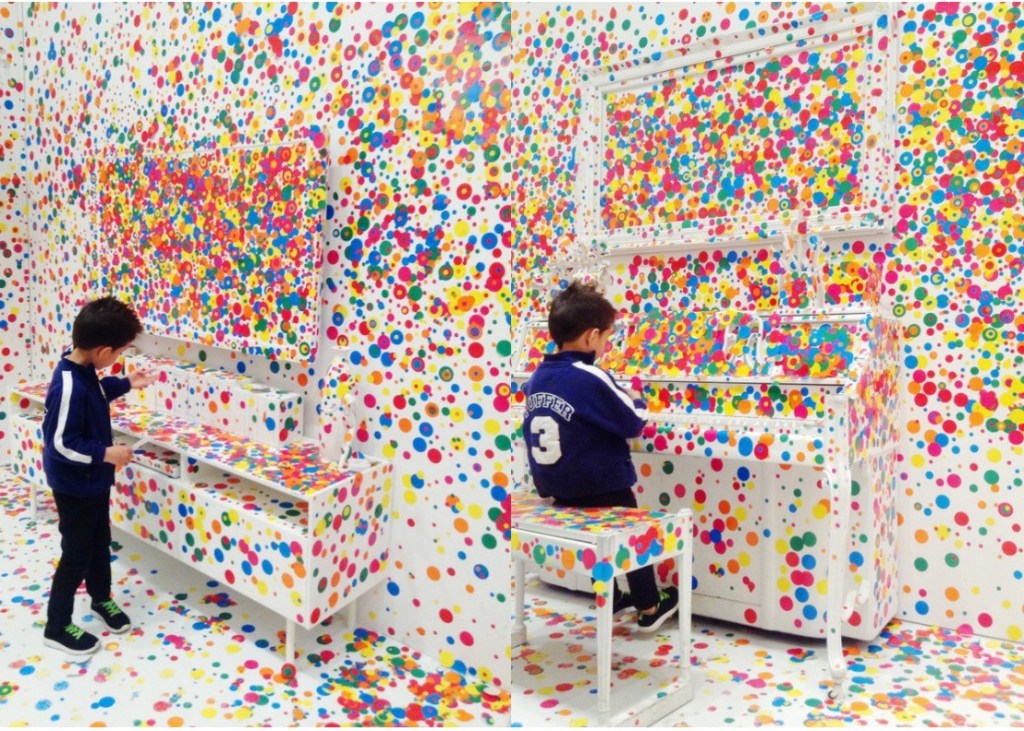
美術手帖|暑假去美术馆才是正经事!日本夏季展览12选

美术手帖于2019/7/26发布于 (翻译)https://mp.weixin.qq.com/s/_WpcfqXKyNqmKHIX0PET6Q

夏季来日本旅游时,去美术馆看展是许多人的必做事项之一。《美術手帖》编辑部为您精选总结暑假期间全日本最值得一看的12场展览。
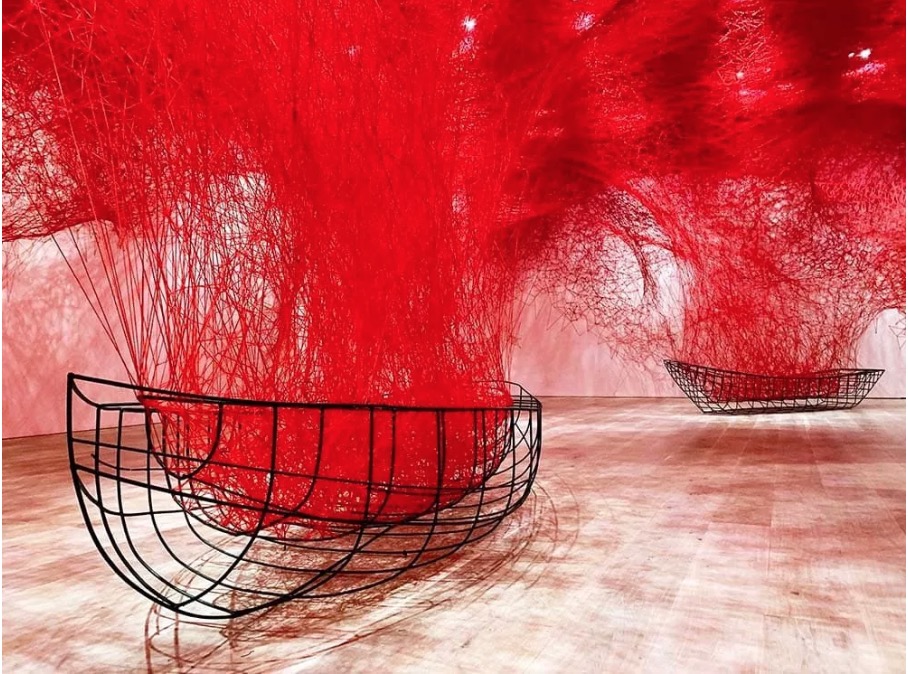
“盐田千春展:灵魂颤抖”展览现场,《不确定的旅行》(2016)

—首都圈—

波尔坦斯基作品的集大成

“克里斯蒂安・波尔坦斯基 – Lifetime”(国立新美术馆)

“克里斯蒂安・波尔坦斯基 – Lifetime”展览现场,《青春时代的记忆》(2001)

  法国当代艺术的领头人克里斯蒂安・波尔坦斯基。网罗了波尔坦斯基从早期作品到最新作品的大型回顾展“克里斯蒂安・波尔坦斯基 – Lifetime”,继大阪国立国际美术馆后,巡展至东京国立新美术馆。

  本展展出了波尔坦斯基的代表作之一“纪念碑”系列——该系列将孩子的肖像照和电灯泡像祭坛一样组合在一起,以此来激发人们对宗教问题的意识——还展出了早期影像作品《咳嗽的男人》(1969)、《保存室(加拿大)》(1988)等。波尔坦斯基针对巡回展的三个场馆(国立国际美术馆、国立新美术馆和长崎县美术馆)的不同之处,创作了和每个场馆相呼应的装置作品。

  当前,波尔坦斯基在东京表参道的路易威登艺术空间的个展“AnimitasⅡ”也在举办中。不要错过在两个迥异的空间内欣赏艺术家代表作品的绝佳机会。

>>美術手帖|波尔坦斯基最大回顾展开幕,在国立新美看完艺术家的一生

展期:2019年6月12日~9月2日

会场:国立新美术馆 企画展示室2E

地址:东京都港区六本木7-22-2

电话:03-5777-8600

开放时间:10:00~18:00(7、8月的周五、六〜21:00) ※最终入场到闭馆30分钟前为止

休馆日:周二

门票:普通 1600日元 / 大学生 1200日元 / 高中生 800日元 / 中学生以下免费

与病魔抗争的艺术家的纤细灵魂

“盐田千春展:灵魂颤抖”(森美术馆)
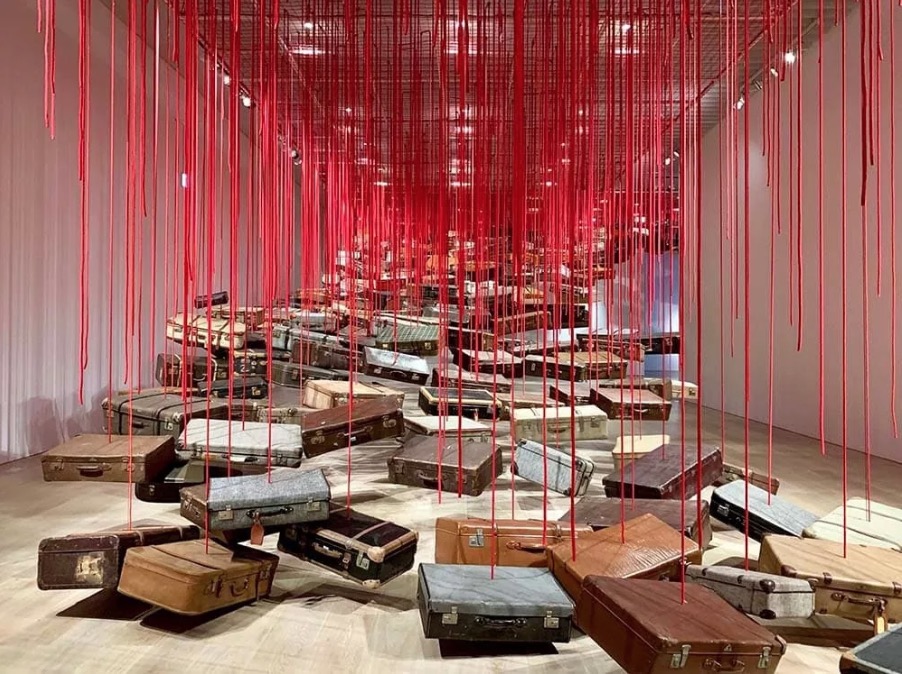
“盐田千春展:灵魂颤抖”展览现场,《聚集–寻找目的地》(2016)

  丝线交错的空间、使用大量旧手提箱的展示等,以沉浸式装置艺术而闻名的盐田千春正在六本木的森美术馆举办回顾其20年艺术生涯的大型个展“盐田千春展:灵魂颤抖”。

  盐田在两年前收到了本次展览的邀请。但是在接受邀请的第二天,她发现自己12年前患过的癌症又复发了。于是盐田一边和病魔做斗争,一边精心准备本次展览。

  盐田在与死亡相伴的过程中完成的本次展览,总共展出了113件作品。其中18件是新创作的作品。通过创作来探讨“活着到底是什么”,从中或许能捕捉到艺术家灵魂的微妙之处。

>>美術手帖|她用丝线编织出灵魂的呐喊,盐田千春个展在森美术馆开幕

展期:2019年6月20日~10月27日

会场:森美术馆

地址:东京都港区六本木6-10-1 六本木之丘森大厦53楼

电话:03-5777-8600

开放时间:10:00~22:00(周二〜17:00) ※最终入场到闭馆30分钟前为止

休馆日:展期中无休

门票:普通 1800日元 / 65岁以上 1500日元 / 高中・大学生 1200日元 / 4岁~中学生 600日元

不画画的高畑勋的秘诀是什么

“高畑勋展—日本动画传奇”(东京国立近代美术馆)

“高畑勋展—日本动画传奇”展览现场,《阿尔卑斯山的少女》赛璐珞动画和背景画

  高畑勋曾参与从《百变狸猫》《辉夜姬物语》等吉卜力工作室出品的电影作品,到以《阿尔卑斯山的少女》为代表的电视系列作品的创作。在日本动画届留下了浓墨重彩的一笔的高畑勋,在2018年辞世后的首次回顾展“高畑勋展—日本动画传奇”正在竹桥的东京国立现代美术馆举办中。

  本次展览按时间顺序介绍了高畑勋从60年代至今的作品。展出了与优秀的动画制作者和艺术监制们共同创作的分镜、背景画、布局、色彩设计等众多资料,以及高畑勋亲笔写下的创作手稿等。

  一个不会画画的动画导演高畑勋的秘诀是什么呢?通过本次展览能追溯高畑在各种各样的创意工作者的协助下,诞生出一个又一个名作的创作轨迹。

>>美術手帖|高畑勋为后人留下了什么?从这里进入日本动画传奇的创作世界

展期:2019年7月2日~10月6日

会场:东京国立近代美术馆1楼企画展展厅

地址:东京都千代田区北之丸公园3-1

电话:03-5777-8600

开放时间:10:00〜17:00(周五六〜21:00) ※最终入场到闭馆30分钟前为止

休馆日:周一(公共假日的情况开馆,次日休馆)

门票:普通 1500日元 / 大学生 1100日元 / 高中生 600日元 / 中学生以下免费

日本时隔11年的美术馆个展

“朱利安・奥佩展”(东京歌剧城美术馆)
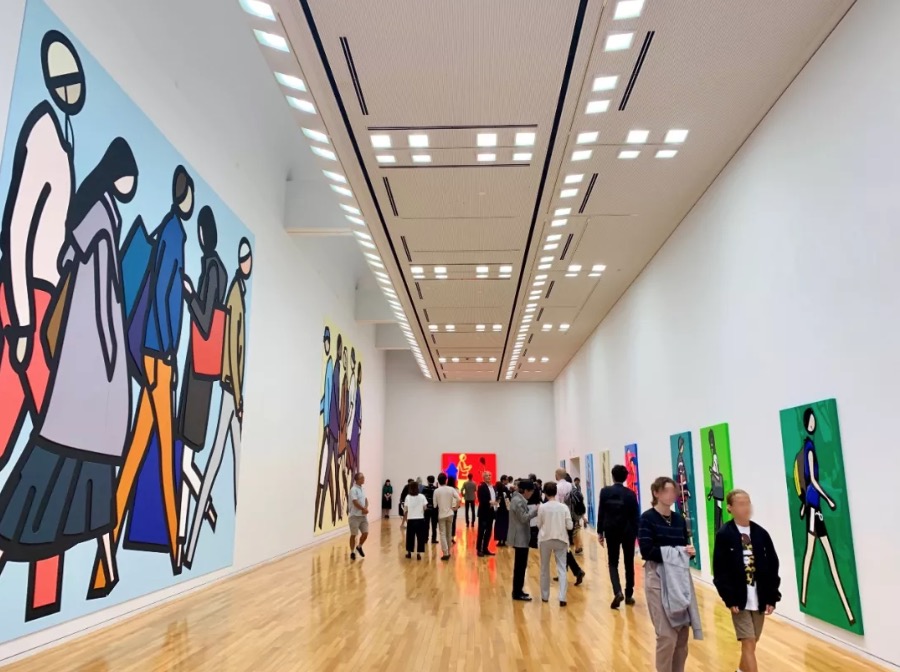
“朱利安・奥佩展”展览现场

  朱利安・奥佩于80年代开始在欧洲艺术界崭露头角,其代表风格为使用点和线这些最小的视觉语言传神地描绘人物和风景。因仅用寥寥几笔就能准确地传达出模特的个性和性格的肖像画而知名的奥佩,在近年创作了很多人物的全身和侧面像的作品,而且有不断简化的趋势。

  奥佩时隔11年再次在日本的美术馆举办个展,地点在初台的东京歌剧城美术馆。本次展览以首次公开的新作为中心,由奥佩亲自挑选的绘画、雕刻、影像等作品组成。在现场流淌的背景音乐也是奥佩作品的一部分。

  被世界重要美术馆收藏、引领艺术界的奥佩。通过本展可以一览奥佩的创作世界。平面作品和立体作品分开展出的场馆设计也显得大胆而明快。

>>美術手帖|寥寥数笔描绘当代群像,朱利安・奥佩所叙说的“物语”

展期:2019年7月10日〜9月23日

会场:东京歌剧城美术馆

地址:东京都新宿区西新宿3-20-2

电话:03-5777-8600

开放时间:11:00〜19:00(周五六〜20:00)

休馆日:周一(公共假日的情况次日休馆)、8月4日(全馆休馆日)

门票:普通 1200日元 / 大学・高中生 800日元 / 中学生以下免费

从虫子的外观中受到启发的展览

“虫展 – 设计模型 –”(21_21 DESIGN SIGHT)
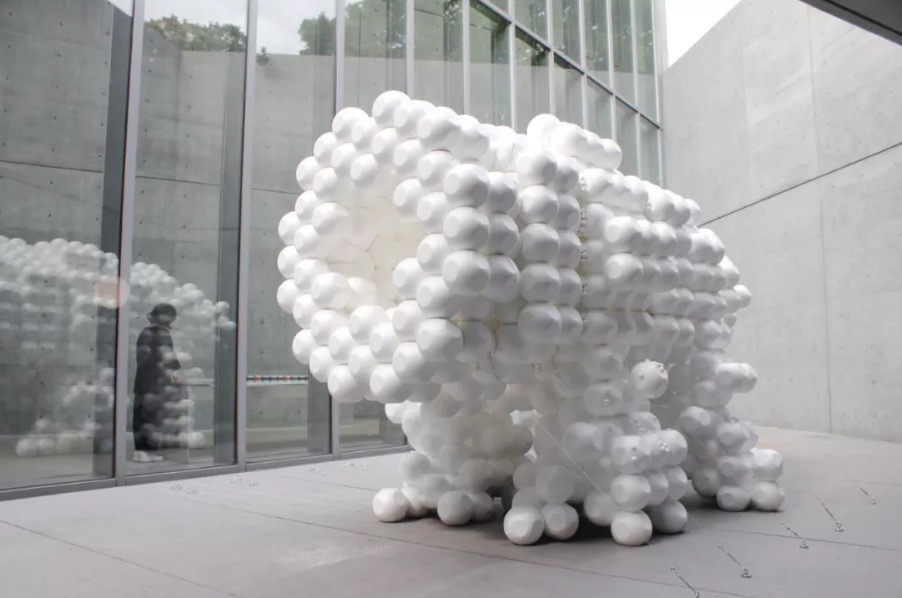
“虫展 – 设计模型 –”展览现场,隈研吾建筑都市设计事务所+江尻宪泰《磁石之巢》

  平面设计师佐藤卓担任策展,解剖学者养老孟司担任展览监制的“虫展 – 设计模型 –”正在六本木的21_21 DESIGN SIGHT举办中。

  本次展览从比人类出现得更早、持续进化至今的多种多样的虫子的外观切入,以发现设计的新灵感。隈研吾建筑都市设计事务所+艾伦・博顿(Alan Burden)/江尻宪泰/佐藤淳、动画艺术家水江未来、工业设计师山中俊治等活跃在不同领域活的创意工作者们也参与了本次展览。

  将支撑虫子躯干的骨架应用到人造物上的作品、将虫子翅膀的挥动原理应用到机器人上的作品、以及将幼虫建造的巢穴结构活用到建筑领域的作品等,从虫子上得到灵感的多种多样的作品一同展出。

>>美術手帖|昆虫和设计有什么联系?去21_21 DESIGN SIGHT寻找答案

展期:2019年7月19日〜11月4日

会场:21_21 DESIGN SIGHT 展厅1&2

地址:东京都港区赤坂9-7-6 东京中城花园内

电话:03-3475-2121

开放时间:10:00〜19:00 ※最终入场到闭馆30分钟前为止

休馆日:周二(10月22日开馆)

门票:普通 1200日元 / 大学生 800日元 / 高中生 500日元 / 中学生以下免费

* 在暑假期间,别忘了东京都现代美术馆还有“游戏的时间”和“MOT卫星2019 扩展的地图”两个展览。

   “游戏的时间”(7月20日~10月20日)聚焦于能摆脱传统想法和规则、发现新价值和法则的“游戏”这一主题,介绍了6组艺术家的作品。不但有体验型作品可以亲自试玩,还有可以和艺术家交流的多种多样的活动。

  “MOT卫星2019 扩展的地图”(8月3日~10月20日)在新改造后的美术馆主展厅、清澄白河附近的咖啡馆和其他店铺等共7个地点进行作品展示。即便出了美术馆,也能探索新旧文化交汇的街道。

—首都圈外—

邂逅仿生兽

“泰奥・扬森展”(札幌艺术之森美术馆)
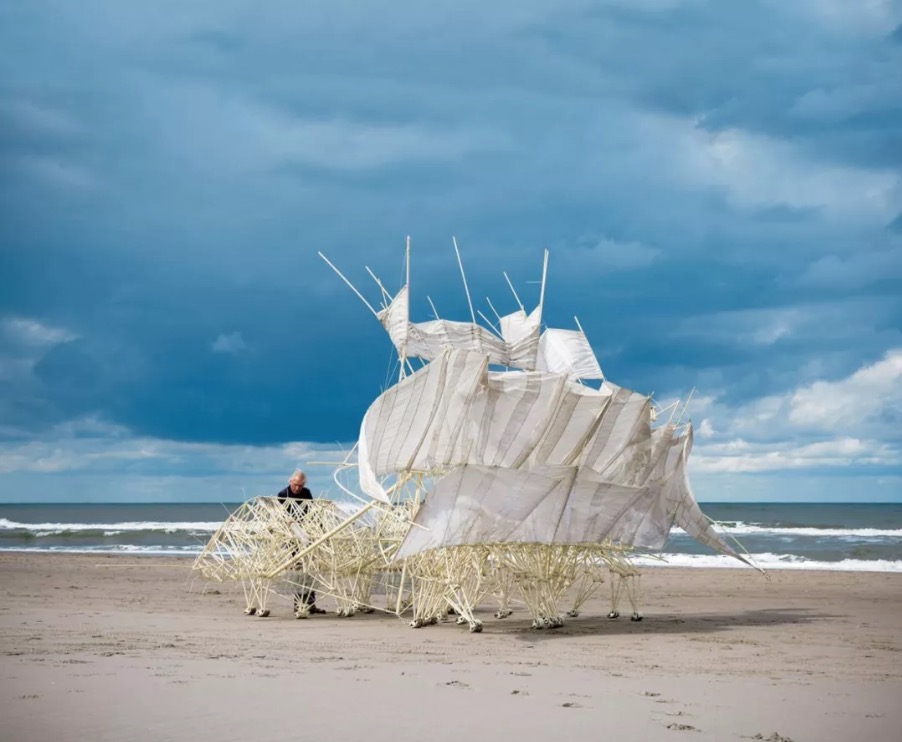
泰奥・扬森 Animaris Plaudens Vela 2013 © Theo Jansen

  在郁郁葱葱的大自然环境中散布着美术馆、工作室等建筑的“札幌艺术之森”。坐落其中的札幌艺术之森美术馆正在展出“泰奥・扬森(Theo Jansen)展”。

  扬森于1948年在荷兰出生。90年代起开始创作“仿生兽(Strandbeest)”系列,此后一直游走在艺术和科学两大领域之间并持续尝试新的挑战。仿生兽是以风力为动力的能够像生命体一样快速移动的人造物。由塑料管制作的骨架在沙滩上跑来跑去的样子给很多人留下了印象。

  本次展览一共展出了12件作品,其中5件作品为首次在日本展出。展览期间,每天有1个小时左右能看到仿生兽实际动起来的样子。

展期:2019年7月13日~9月1日

会场:札幌艺术之森美术馆

地址:札幌市南区艺术之森2-75

电话:011-591-0090

开放时间:9:45~17:30 ※最终入场到闭馆30分钟前为止

休馆日:展期中无休

门票:普通 1300日元 / 高中・大学生 800日元 / 小・中学生 500日元

体验共同创造

“teamLab 学习!未来的游乐园 同花一起生活的动物们”(北海道立带广美术馆)
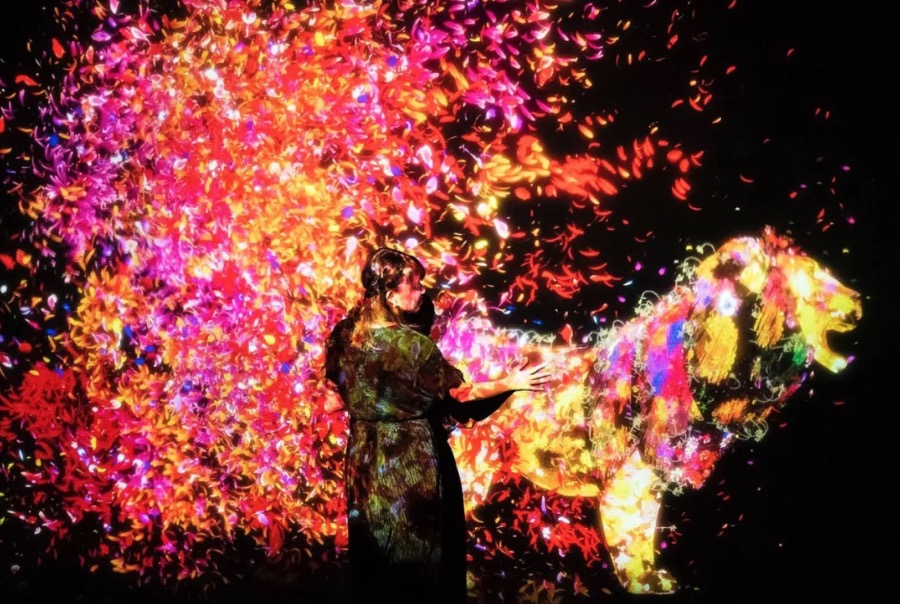
teamLab 同花一起生活的动物们  2017 音乐=Hideaki Takahashi

  teamLab出品的“学习!未来的游乐园”,以与他人一同自由地创造新世界的“协同创造性、共同创造”为概念,在国内外实验性地展开中。

  目前“teamLab 学习!未来的游乐园 同花一起生活的动物们”正在北海道立带广美术馆展出中。本次展览展出了由访客绘制的鱼在屏幕之上游弋的《绘画水族馆》、能够亲自体验向上攀爬的《培育一切!水果田地》、以及《同花一起生活的动物们》等6件作品。

  展览期间还设置了能将《绘画水族馆》绘制的图案做成徽章的“徽章工厂”。不要错过体验这个广受好评的“学习!未来的游乐园”项目的机会。

展期:2019年7月6日~9月1日

会场:北海道立带广美术馆

地址:北海道带广市绿之丘2(绿之丘公园内)

电话:0155-22-6963

开放时间:9:30~17:00 ※最终入场到闭馆30分钟前为止

休馆日:周一(公共假日的情况次日休馆)

门票:普通 1400日元 / 高中・大学生 900日元 / 小・中学生 600日元 / 未就学儿童免费 ※“徽章工厂”每个500日元

用机器描绘的神话世界

“柳美和展:神话机器”(福岛县立美术馆)
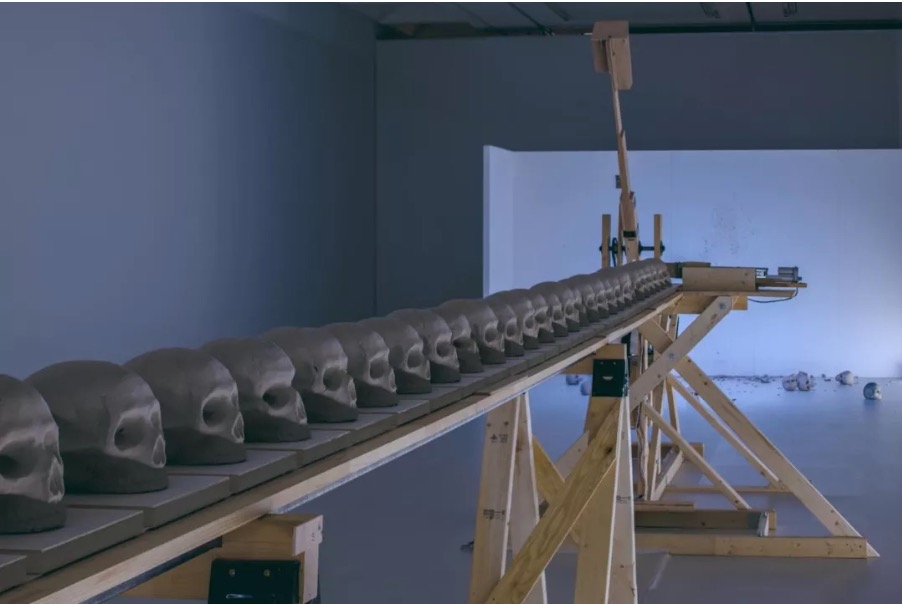
柳美和 神话机器 Mnēmē(投掷机器) 2019 制作=福岛县立福岛工业高等学校 摄影=表恒匡

  艺术家柳美和的代表作品有以女性为对象的摄影作品、以及用大型房车在日本各地巡回的户外演出等。本次个展“神话机器”目前正在福岛县立美术馆巡回展出中。

  本次展览除了《电梯女孩》《我的奶奶》等曾经的代表作之外,还展出了以日本神话和桃子为主题在福岛市内拍摄的摄影系列“女神和男神在桃树下分别”等新作。此外,柳美和和各地的大学合作的“手机剧院项目”系列、由机器演绎莎士比亚等戏剧中某个场景的《机械神话》也一同展出。

  对于柳美和来说,这次时隔10年的个展一方面追溯了她创造的源头,另一方面也能一窥她最新的尝试。

展期:2019年7月6日~9月1日

会场:福岛县立美术馆 企画展示室

地址:福岛市森合字西养山1

电话:024-531-5511

开放时间:9:30~17:00 ※最终入场到闭馆30分钟前为止

休馆日:周一(8月12日开馆)、8月13日

门票:普通・大学生 1000日元 / 高中生 500日元 / 小・中学生 300日元

开馆首次当代艺术展

“切分音:世纪巨匠与当代艺术”(POLA美术馆)
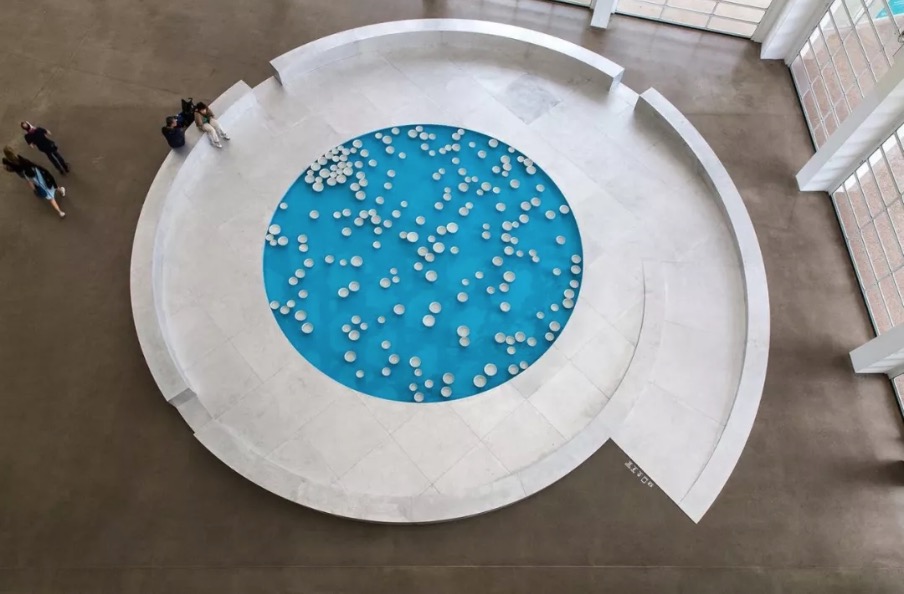
塞莱斯特・布谢-穆日诺 clinamen v.2 2013 现场图片来自Centre Pompidou-Metz © Céleste Boursier-Mougenot 摄影=Rémi Bertrand

  位于神奈川箱根町的POLA美术馆,即将举办开馆以来第一次以当代艺术为主题的展览“切分音:世纪巨匠与当代艺术”。

  本次展览将展示莫奈和毕加索等艺术家的从绘画到雕塑、东洋瓷器等多领域的馆藏作品,以及日本国内外的当代艺术家的作品。塞莱斯特・布谢-穆日诺(Céleste Boursier-Mougenot)创作的漂浮在圆形游泳池水面的碗碰撞发出声音的作品,以及由苏珊・菲利普斯(Susan Philipsz)创作的室外有声装置作品也可以在展览中看到。其余参展艺术家还有奥利弗・比尔(Oliver Beer)、康迪达・赫弗(Candida Hofer)、阿丽佳・柯维德(Alicja Kwade)、沃尔夫冈・提尔曼斯(Wolfgang Tillmans)、矶谷博史、渡边丰、横沟静等。

  此外本馆从8月10日开始,初中生及以下可以免费入馆参观。在暑期期间举办的多种多样的活动,例如“夏季儿童周”和户外活动“FOREST MUSEUM 2019”等,也非常值得一起体验。

展期:2019年8月10日〜12月1日

会场:POLA美术馆

地址:神奈川县足柄下郡箱根町仙石原小塚山1285

电话:0460-84-2111

开放时间:9:00〜17:00 ※最终入场到闭馆30分钟前为止

休馆日:展期中无休

门票:大人 1800日元 / 65岁以上 1600日元 / 大学・高中生 1300日元 / 中学生以下免费

背负着记忆与过去前行的方法

“山口启介 回首中向前”(广岛市现代美术馆)

山口启介 同存的两张脸、为了世界的核心 2017

  80年代中后期,凭借描绘方舟的大型铜版画作品引起巨大反响的山口启介的大型个展正在广岛市现代美术馆举办中。除了版画,山口将花、种子、心脏、人体等变形,创作出了许多绘画和雕塑等形式的作品。从东日本大地震发生3天后起,山口还一天不漏地记录着《地震后的笔记》。

  山口说:“人不可以预见未来,但是可以回顾过去或专注于当下这个瞬间,所以人是在回首中前进。”本次展览还能欣赏到以多重面孔为主题的大型绘画新作。

  美军在广岛投下原子弹而终结了二战,暑假期间还能在广岛回顾这段厚重的历史。和山口一起,探索如何让许多人背负着过去和回忆继续前进的方法。

展期:2019年6月8日〜9月4日

会场:广岛市现代美术馆A展示室

地址:广岛市南区比治山公园1-1

电话:082-264-1121

开放时间:10:00〜17:00 ※最终入场到闭馆30分钟前为止

休馆日:周一(8月12日开馆,次日休馆)

门票:普通 1000日元 / 大学生 700日元 / 高中生・65岁以上 500日元 / 中学生以下免费

以濑户内的景色和时间为主题的新作

“宫永爱子:漕法”(高松市美术馆)

展览现场

  使用在常温下会升华的那夫塔林等材料来细腻表现“持续变化而又存在的世界”的宫永爱子,她在日本四国的首次大规模个展于7月17日在高松市美术馆开幕。

  本次展览以濑户内海的景色和当地人的历史为主题,展出了用能演奏清澈音色的赞岐岩为材料制作的最新装置艺术,以及“信”和“life”代表系列等。本次展览也是“濑户内国际艺术节2019”展览之一。在炎夏的濑户内,一起沉浸在这些与海相关的景色与流逝的时光痕迹当中。

>>美術手帖|自然、建筑与艺术联合,在濑户内国际艺术节上演“海之复权”

展期:2019年7月17日~9月1日

会场:高松市美术馆

地址:香川县高松市绀屋町10-4

电话:087-823-1711

开放时间:9:30~19:00(周日〜17:00) ※最终入场到闭馆30分钟前为止

休馆日:周一(8月12日开馆)

门票:普通 1000日元 / 大学生 500日元 / 高中生以下免费

动画界出道55年后的首次回顾展

“富野由悠季的世界—高达战士、传说巨神伊迪安、以及现在”(福冈市美术馆)
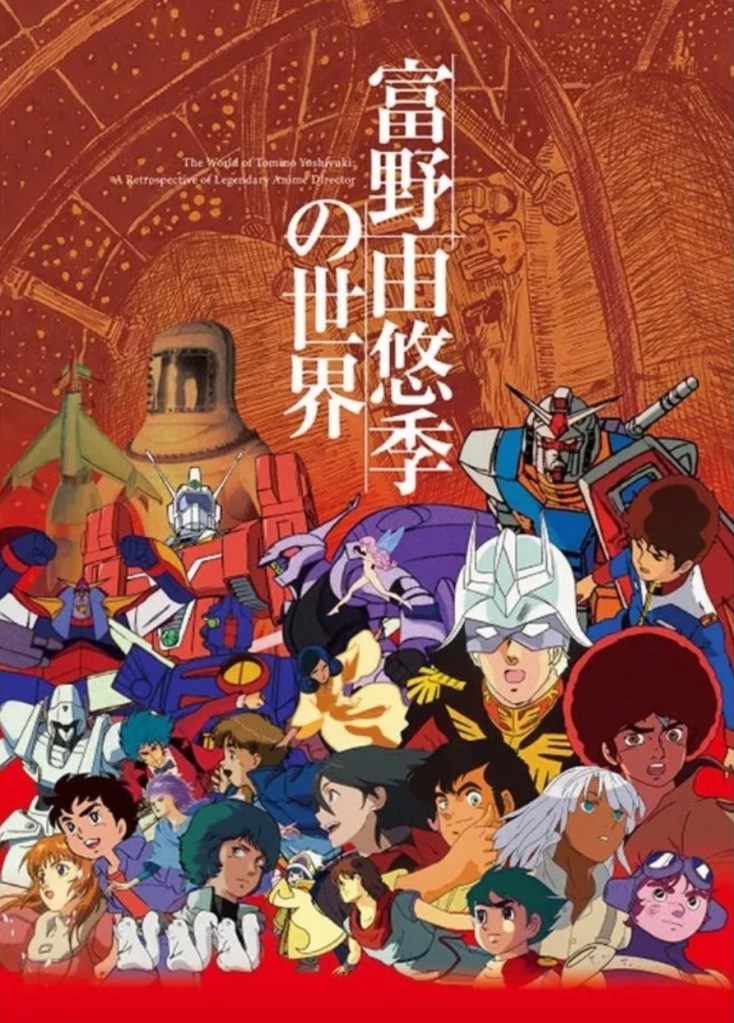
手冢制片・东北新社 © 东北新社 © Sunrise © 创通・Sunrise © Sunrise・サンライズ・Bandai Visual・Bandai Channel © SUNRISE・BV・WOWOW © Office I

  担任过“高达战士”系列、“传说巨神伊迪安”“圣战士登拜因”等多个原创动画的总导演,对国内外动画界有巨大影响力的富野由悠季。一览其55年创作的展览“富野由悠季的世界—高达战士、传说巨神伊迪安、以及现在”正在福冈美术馆开展中。

  富野舍弃了在机器人动漫中被视为常识的惩恶扬善型故事,而是选择了严肃讨论人性的叙事。本次展览以“踏上旅程与归来、对立与和解、生与死、破灭与再生”为主题,展示了他亲笔绘制的分镜、设计稿、原画和用于摄制的赛璐珞画等资料,以全面介绍他的工作成果。

  之后,本次展览还会到兵库、岛根、青森巡展。利用暑假时光,抢先一步到福冈一窥究竟吧。

展期:2019年6月22日~9月1日

会场:福冈市美术馆

地址:福冈市中央区大濠公园1-6

电话:092-714-6051

开放时间:9:30~17:30(7・8月每周五六〜20:00) ※最终入场到闭馆30分钟前为止

休馆日:周一(8月12日开馆,次日休馆)

门票:普通 1400日元 / 高中・大学生 700日元 / 小・中学生500日元

* 除了上述的展览之外,还有青森县立美术馆展出“面向孩子的建筑与空间展”(7月27日~9月8日),郡山市立美术馆则有巡回展览“帕丁顿熊“(~9月1日)。以及在静冈佐野美术馆能欣赏到清凉的金鱼世界“金鱼画师 深堀隆介”(~9月1日)、新潟市新津美术馆的“光与游戏 超体感型美术馆回归啦!魔法的美术馆”(~9月1日)。

  大阪国立国际美术馆的“抽象世界”展览(~8月4日)、京都国立近代美术馆的“来自土耳其的珍宝 郁金香宫殿 托普卡帕之美 ”(~7月28日)、冲绳县立博物馆・美术馆的“吉卜力大博览会”(~9月8日)等展览也不要错过。

翻译=娄依伦
​美術手帖|重庆会成为中国艺术第三极吗?发展途中的重庆的现在与未来

美术手帖于2019年7月22日发布(翻译)于 https://mp.weixin.qq.com/s/Og1qnSK1iEJhGEw3iMaQ0w

自成一格的重庆

  重庆市是中国西南部的主要城市。人口约为3000万人,与北京、上海并列为直辖市。与欧美画廊不断入驻、大型美术馆陆续开馆的北京、上海相比,重庆的艺术生态依然在发展阶段,市场也并未成熟。但作为后进者的重庆也发展出了自己的一条艺术道路。

  笔者从2016年开始陆续造访重庆,也持续地对其进行研究。重庆的艺术大致可以被分为以下3类。

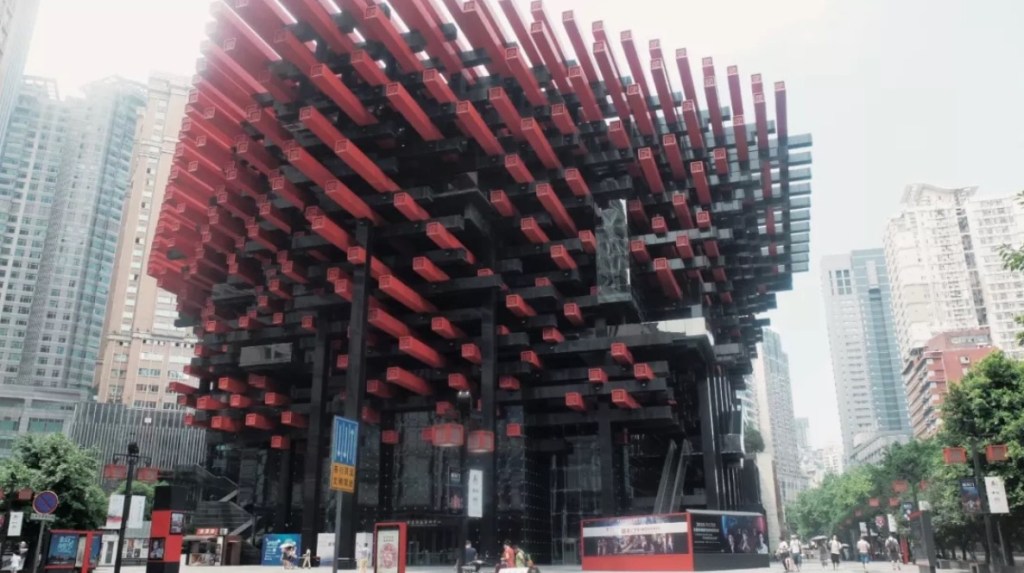
重庆美术馆外观

  第1类是中国政府主导的美术馆。位于繁华街中央的重庆美术馆就是一个典型例子。红与黑的梁柱直接暴露在外的独特建筑,与解放碑一同成为重庆的城市地标之一。

  第2类是企业支持的美术馆或画廊。如今中国的主要城市为了发展文化产业规划了一系列的艺术区,其中多以企业为管理主体。例如与市中心的“海王星艺术区”相邻的星汇当代美术馆就是由一家设计公司运营的。

十方艺术中心(DAC)的入口

  第3类则是与政府、企业相对独立的非盈利组织运营的艺术中心。“器. Organhaus”和“十方艺术中心(DAC)”便是其中的翘楚。两个机构都有展览、面向国内外艺术家的驻留计划、对外出租工作室、教育项目等多样且富有活力的活动,与欧美和日本的艺术家也联系紧密。

十方艺术中心(DAC)的展示空间

  政府与企业背景的机构虽财务状况稳定,但作品的自主性和策划的创意性匮乏。然而非盈利机构在财政上虽不稳定,但能够整合学术研究和国际协作两方面。

  这种分类方式不能说非常严密。因为和日本相比,中国政府的介入更为强势。无论是企业背景还是非盈利机构背景,有不少会接受政府的部分资金支持。总的来说,重庆的艺术生态是在中国政府的领导背景下催生出的多种多样的艺术活动。

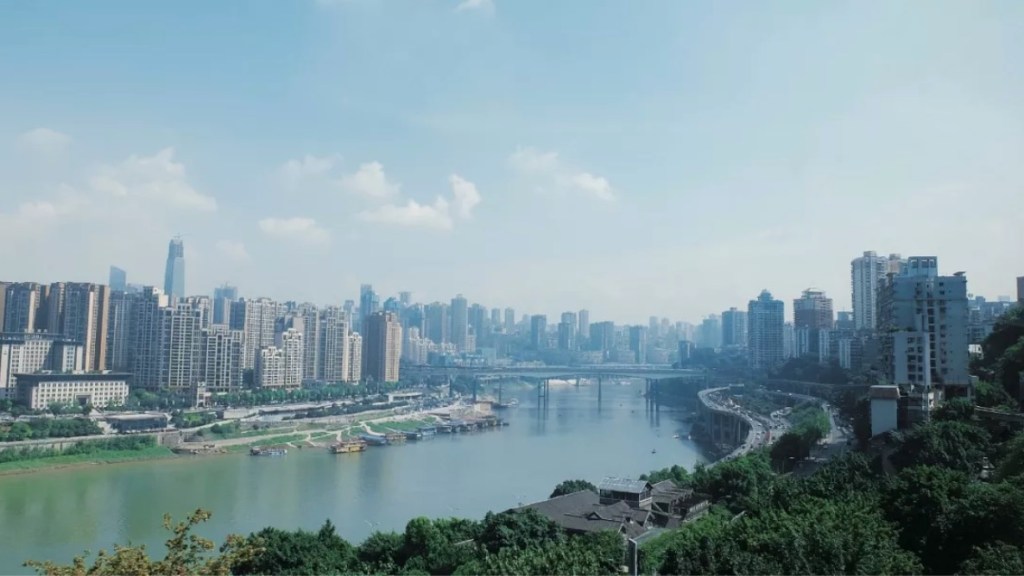
重庆市的风景

国家主导的“艺术与社会”

  最能体现前述重庆艺术生态特征的例子就是“艺术与社会”。近年,该主题在艺术项目和艺术节日益发展的日本也获得了许多关注。但与日本不同,该主题在中国成为了政府主推的国家政策之一。如何缩小因极速增长的经济建立起的城市地区与农村地区之间的差距是中国政府面对的紧要问题。有着好几个贫困农村地区的重庆也不例外。因此重庆政府以“艺术与社会”为主题,与企业或非营利组织主导的艺术机构协作,推动多个艺术项目和艺术节的开展。

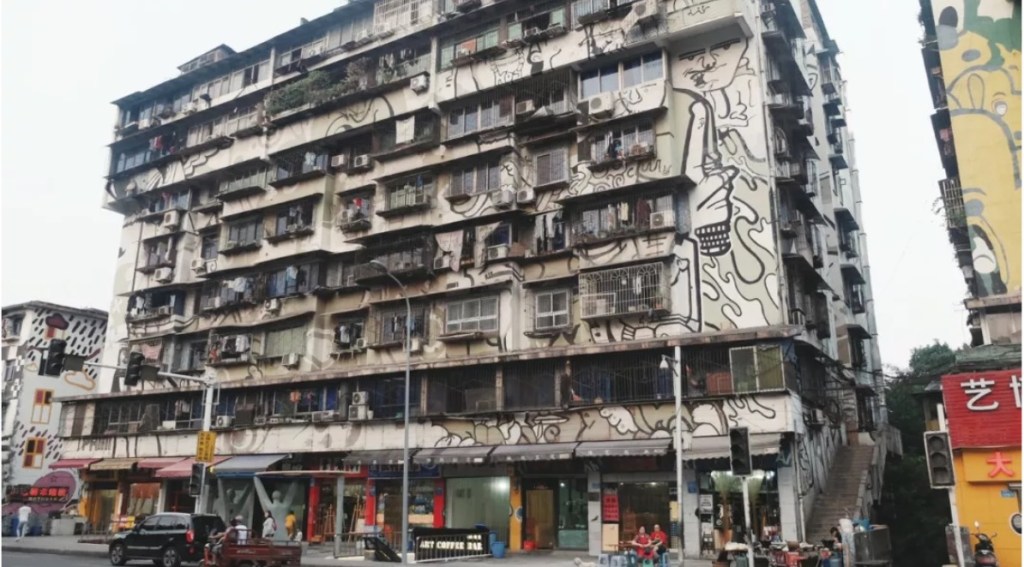
四川美术学院前被涂鸦过的居民楼

  重庆市内唯一一所艺术大学四川美术学院近年设立了艺术与乡村研究院,这是一所以“用艺术振兴农村”为理念的专门机构。一方面从世界各国邀请资深人士参与国际会议,另一方面多次开展让艺术家驻留农村进行创作的艺术项目。其中与波兰的合作项目被作为重点推进。这也响应了习主席提倡的一带一路的经济圈构想。该美院的教授王天祥也表示要逐步发展至能举办大型艺术节。

政府、企业和大学共同举办的艺术节

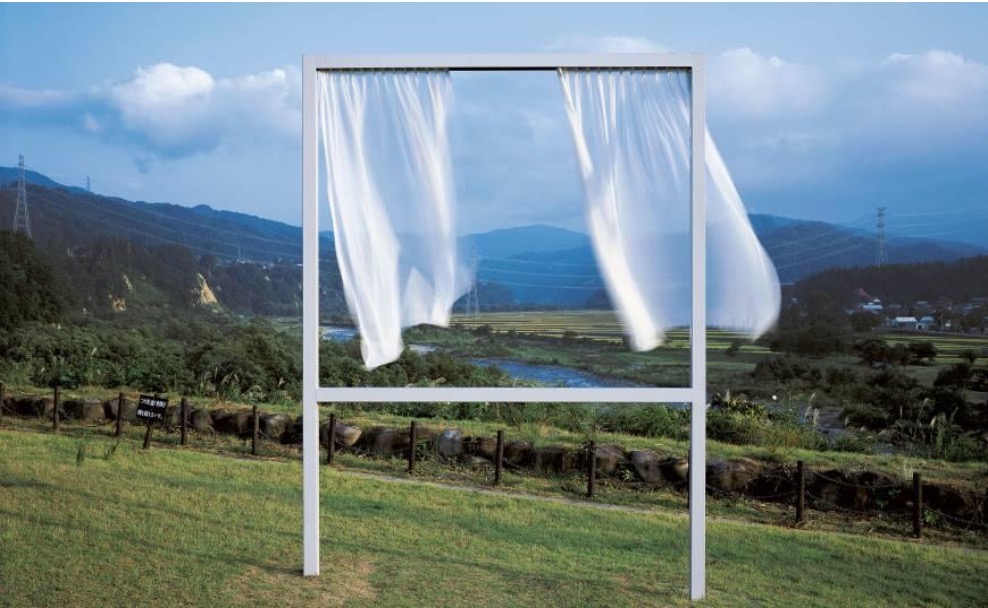
武隆的现场照片

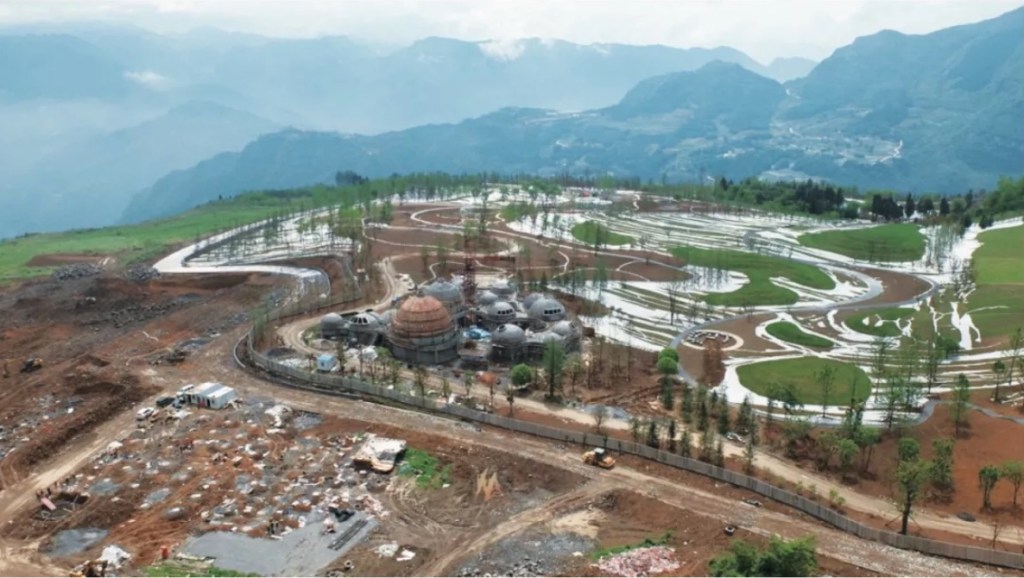
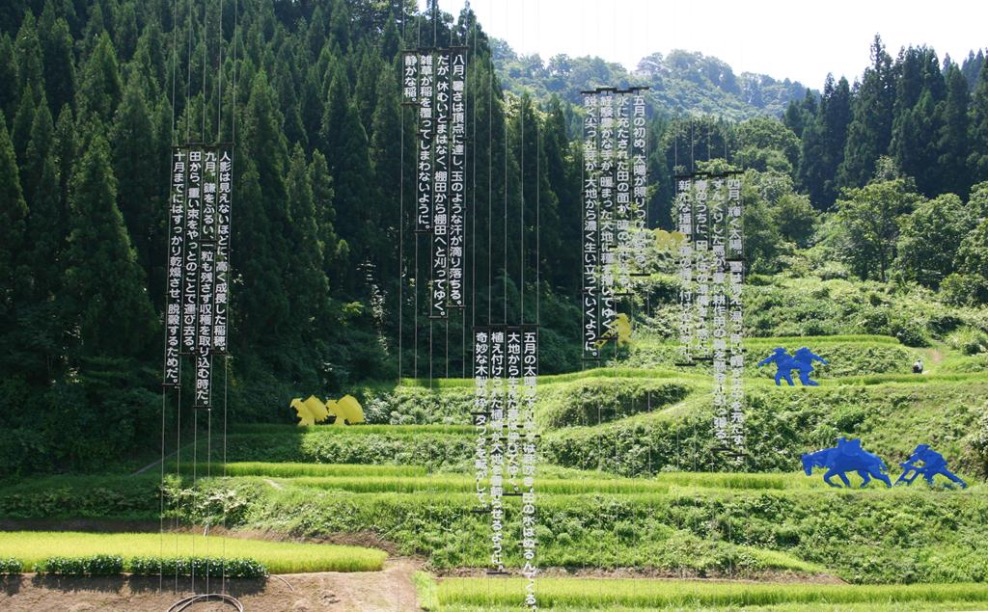
  近期就有一个艺术节即将开始。从市中心驾车3小时就能到达的武隆区将于8月举办“武隆・懒坝国际大地艺术季”。武隆因其喀斯特地貌而为人所知,是风景秀丽的观光地点。该艺术节位于武隆一角的农村,是分阶段在建的佛寺、美术馆、酒店和商业设施等大型项目中的一部分。虽然项目主导者是土地开发方,但中国政府和四川美术学院也深入参与。总而言之就是政府、企业和大学一同筹划与运营的艺术节。在北京和上海并没有这样的艺术节,这可以说是重庆独有的特点。

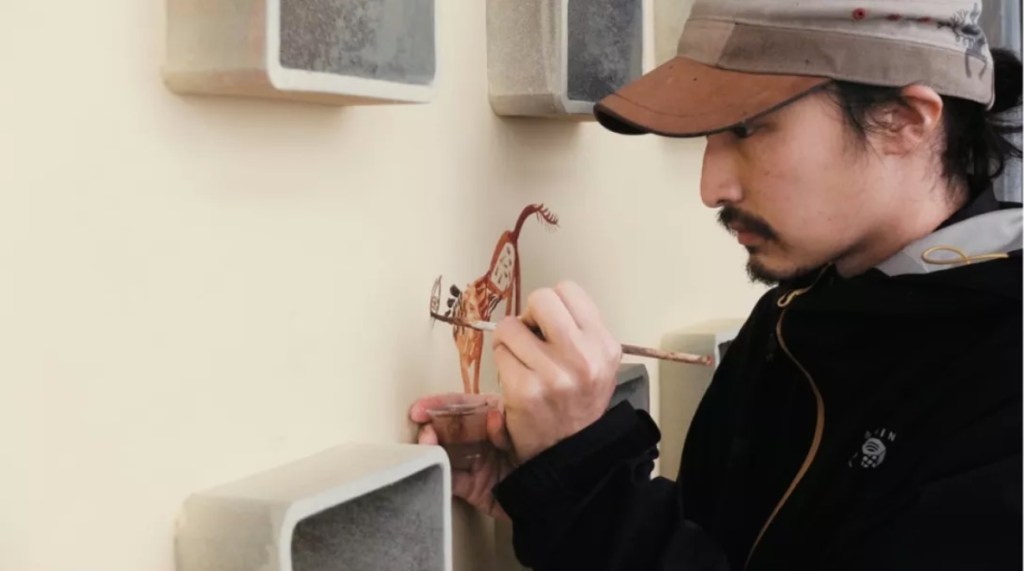
参展艺术家浅井裕介的创作景象

  从一开始,这样的艺术节和日本的地方举办的艺术节之间的并没有太大区别。两国关于土地的思想本就有所不同,因此中国的地方和日本的地方难以一概而论。或者说,中国的艺术自由度还有待提高,审查也客观存在。一旦政府的“选择与集中”的方针有变,资金也有可能被随时撤走。另一方面,对照在衰退社会环境下催生出的日本的艺术节,在上升社会环境下孕育出的艺术节可能有我们难以想象的成果。从结果看,该艺术节也许能给当地居民带来幸福,或许还能产出以日本贫瘠的文化政策所不能想象的杰作。并未跟随欧美的艺术生态,也未复制日本的艺术节的重庆也许能创造出全新的生态。我很期待重庆未来的发展。

  (本文转载自《美術手帖》8月刊“盐田千春”特辑,点击“阅读原文”购买。)

翻译=娄依伦

武隆・懒坝国际大地艺术季

日期:8月3日至11月3日

地点位于重庆市武隆区仙女山镇。艺术家有来自日本的浅井裕介和松本秋则、在前桥居住的法国人吉尔斯・斯图萨特(Gilles Stassart)、来自法国的克里斯蒂安・波尔坦斯基(Christian Boltanski)、来自丹麦的托马斯・丹博(Thomas Dambo)、以及通过公开征集的中国艺术家等40人左右。


美術手帖|“给艺术以自由”,探寻克里姆特与维也纳分离派的轨迹

《美术手帖》于2019年7月4日发布于(翻译)

https://mp.weixin.qq.com/s/Qplu4-Pas-sftR305uLFMA

古斯塔夫・克里姆特在1897年创立了分离派,这也是克里姆特走上自我风格的道路的开端。绚烂的黄金图案与私人生活中的风流逸事让克里姆特给人们一个华丽的印象。但在追求自我风格的道路上,他也经历了与保守的维也纳艺术界的对抗。本文将聚焦于克里姆特艺术生涯中的维也纳分离派时期,同展览“克里姆特展”和“现代维也纳”的展出作品一起,追溯他的战斗轨迹。

古斯塔夫・克里姆特 贝多芬横饰带(局部) 1984(全尺寸复制品/原版创作时间为1901-02) 216×3438cm 奥地利美景宫美术馆 © Belvedere, Vienna ※ “克里姆特展”展出作品

维也纳分离派的诞生——克里姆特与维也纳大学的天花板画事件

在19世纪后半叶的欧洲,尤其是在法国诞生了印象派和后印象派等崭新的艺术流派,画家们都渐渐离开传统路径开始寻求自我风格。但是,由保守的艺术协会“艺术家之屋(Kunstlerhaus)”支配的维也纳艺术界仍在不断重复着数百年前的传统。20多岁的克里姆特也曾是其中一员。他因使用传统的技法描绘神话等主题的装饰画而受到高度评价,26岁时还受到皇帝的勋章嘉奖。

然而克里姆特对于用传统技巧描绘固定题材的现状并不知足,想要寻求自己的全新的表现方式。1894年,克里姆特接受了维也纳大学天花板画的工作。两年后他提交的草稿作品引起了轩然大波。他并没有按传统的方式去表现客户要求的“医学”“法学”“哲学”等主题,而是采用了自己的诠释方式。

已被焚毁的古斯塔夫・克里姆特《医学》(1899-1907) 图片来源=Wikipedia Commons

尤其是《医学》(1899-1907)的左上角漂浮着的女性裸体等露骨的性描写对于大学内部人士来说,与严肃的学术场合极不匹配(在那之后克里姆特仍然创作并公开了这些作品,然而由于所引发的激烈争议,最后合约被解除)。

通过这个事件,克里姆特深刻地感受到了维也纳艺术界的封闭性与其对新的表现形式的抗拒。提交草稿后的第二年,克里姆特和其他反对保守派的年轻艺术家一起退出了艺术家之屋。由此,一个崭新的艺术团体“维也纳分离派“就诞生了。

古斯塔夫・克里姆特 第1届维也纳分离派展览海报(审查后) 1898 彩色石版画 97x70cm 维也纳博物馆馆藏 © Wien Museum / Foto Peter Kainz ※ “克里姆特展(东京)”和“现代维也纳”的展出作品

参与者不仅有画家,还有雕塑、工艺、建筑等不同领域的艺术家,风格各异,但都以背离传统的“分离”与“寻找崭新艺术表现形式”为目标。随后,在1898年建成的专属展示空间“分离派馆(Secessionsgebäude)”的入口就镌刻着以下名言:“给时代以该时代的艺术,给艺术以自由。”

《帕拉斯・雅典娜》——决意的表明

1898年,在分离派馆举办的第2届维也纳分离派展上,克里姆特展出了被誉为分离派的象征的作品《帕拉斯・雅典娜》。

古斯塔夫・克里姆特 帕拉斯・雅典娜 1898 布面油彩 75x75cm 维也纳博物馆馆藏 © Wien Museum / Foto Peter Kainz ※ “现代维也纳”展出作品

雅典娜是希腊的智慧与战争女神。在神话中常常作为引领英雄们的角色出现,在艺术上则通常用穿着盔甲的女性形象来表现。在艺术上提到女神的话,就会联想到维纳斯一样美丽而优雅的女性形象。但若女神是从黑暗的背景中浮起、身着金色盔甲的话?

头部被冰冷光滑的金色头盔所大面积覆盖,其下露出的眼睛一眨不眨地凝视着你。红唇一线般紧闭,给人以阴冷且难以接近的印象。此外,她单手拿着长柄武器,似乎无论发生了什么都会毅然绝然,毫无摇摆与后退。

在这里的并不是美丽而优雅的、以描绘艺术史上理想女性裸体为借口而被利用的“女神”,而是一位宽大地庇佑并引导信徒,对敌对者毫无宽容地予以惩罚,值得依靠,发怒的话也许比男神更为可怖的女“神”。

克里姆特取材于古代希腊世界,使雅典娜在现代社会语境中重现。他寻求崭新的艺术表现方式,守护反叛的“分离派”,成为了该流派的领军人物。当把视线移到女神的胸前的时候,能看到一个伸着舌头嬉笑的怪物戈耳工的装饰物。戈耳工的表情描绘得极为滑稽,与女神形成了鲜明的对比。这就像对那些无法理解崭新的艺术形式的人们,以及他们所紧紧抱住的传统嗤之以鼻一样。

无论是在哪个领域,自己开辟新的道路并持续前进都不是一件容易的事情。这幅《帕拉斯・雅典娜》就是踏上新道路的克里姆特们的坚定决心的表现。

《贝多芬横饰带》——综合艺术的志向

1898年到1905年的7年间,维也纳分离派共举办了23次展览,不但展示了分离派的艺术品,也介绍了同时代的例如日本和法国等外国艺术。与国外艺术的交流和实践也成为分离派自身发展的养分。

此外,分离派还借由展览的形式尝试了被称为“综合艺术”的概念。最早的例子就是在1902年举办的以贝多芬为主题的第14届分离派展。

首先,在一名成员设计的展厅中央摆放德国雕刻家马克斯・克林盖尔(Max Klinger)制作的大型贝多芬像。然后其他的分离派成员将绘画、家具等在自己拿手的领域中创作的致敬贝多芬的作品围绕在贝多芬雕塑旁。克里姆特的作品则是覆盖展示厅三面墙壁的壁画《贝多芬横饰带》(1901-1902)。

古斯塔夫・克里姆特 贝多芬横饰带(局部) 1984(全尺寸复制品/原版创作时间为1901-02) 216×3438cm 奥地利美景宫美术馆 © Belvedere, Vienna, Photo by Johannes Stoll ※ “克里姆特展”展出作品

横饰带是指像画轴般横向展开的作品。这件作品则以贝多芬的《第九交响曲》为灵感,描绘了身着黄金甲胄的骑士们,为了追求幸福而直面敌对势力,直至伊甸园的故事。整个故事被分为三部分展现,总长计34米。

故事的结局,也被称为《欢乐颂》的第四乐章是右侧的壁画。伊甸园里的天使们手持花朵,在高处合唱着《欢乐颂》,赤身裸体的男女拥抱和亲吻。这是第四乐章歌词中提到的“让亲吻布满世界”的具象化体现。

笼罩全身的金色光芒,以及拥抱的男女头顶上火焰般的图案,使画面整体散发着欢乐的能量。在展览开幕当天,作曲家古斯塔夫・马勒(Gustav Mahler)还在展厅内演奏了自己重新编曲的《第九交响乐》的第四乐章。

如此这般,展厅的设计(建筑)、雕塑、绘画和音乐等所有领域的艺术,跨越了界限,通过“贝多芬”主题连结在一起,成为一件壮大的作品。

无论是为维也纳大学绘制的《医学》还是《贝多芬横饰带》,克利姆林的作品总是被当作批判的对象,但仍有人赞赏他的画作。正因为如此,他在批评和中伤中仍能够前进,并继续战斗。其结果便是,克利姆林作为一位有鲜明个人风格的艺术家,在历史上留下了浓墨重彩的一笔。

“克里姆特展”使用原尺寸的复制品,再现了《贝多芬横饰带》的展览空间,在那里能够体会到克里姆特倡导的“综合艺术”。在“现代维也纳”展不但能看到克里姆特的画作,还能看到其他维也纳分离派成员的作品。读者们还是亲自去到两个展览现场一睹克里姆特和维也纳分离派所追求的理想状态吧。

翻译=娄依伦
克里姆特展:维也纳与日本1900

展期:2019年4月23日〜7月10日

会场:东京都美术馆

地址:东京都台东区上野公园8-36

开放时间:9:30〜17:30(周五〜20:00) ※最终入场到闭馆30分钟前为止

门票:普通 1600日元 / 大学生・专门学校学生 1300日元 / 高中生 800日元 / 65岁以上 1000日元 / 中学生以下免费

巡回:爱知展(2019年7月23日〜10月14日,丰田市美术馆)

现代维也纳 克里姆特、席勒 通往世纪末的道路

展期:2019年4月24日~8月5日

会场:国立新美术馆 企画展示室1E

地址:东京都港区六本木7-22-2

电话:03-5777-8600

休馆日:周二

门票:普通 1600日元 / 大学生 1200日元 / 高中生 800日元 / 中学生以下免费

A trip to Art Basel

In recent years, we have witnessed a rapidly growing number of art fairs all over the world. Among the fierce competition, the most attractive and well-known art fair must be Art Basel. It is held three times a year in three different locations around the world, including Basel, Hong Kong and Miami Beach.  

This year’s Art Basel in Switzerland is open from June 16 to June 21. The first three days are reserved for collectors who received invitations. Public days starts from June 17, and it is expected to attract plenty of people who come to visit.

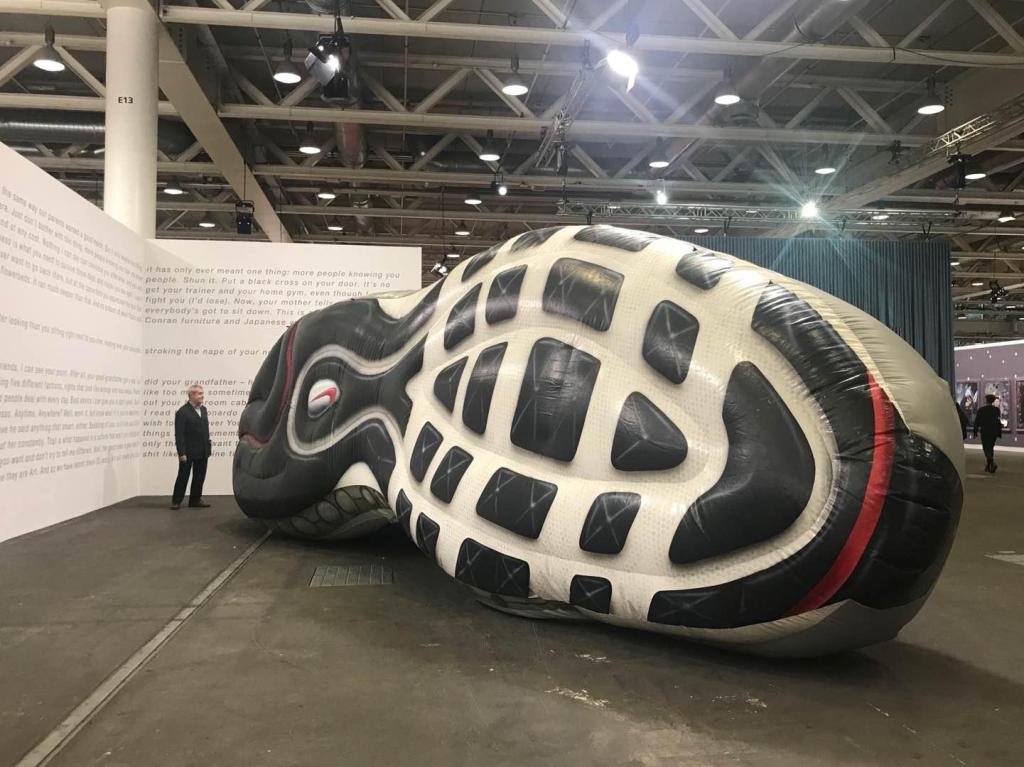
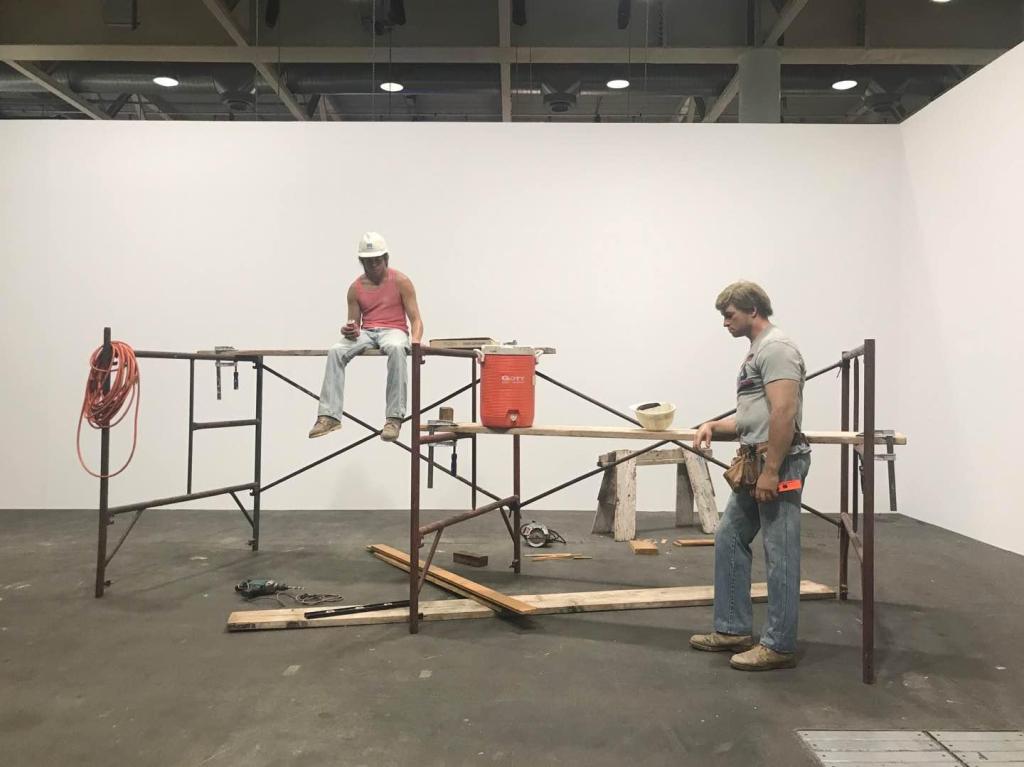
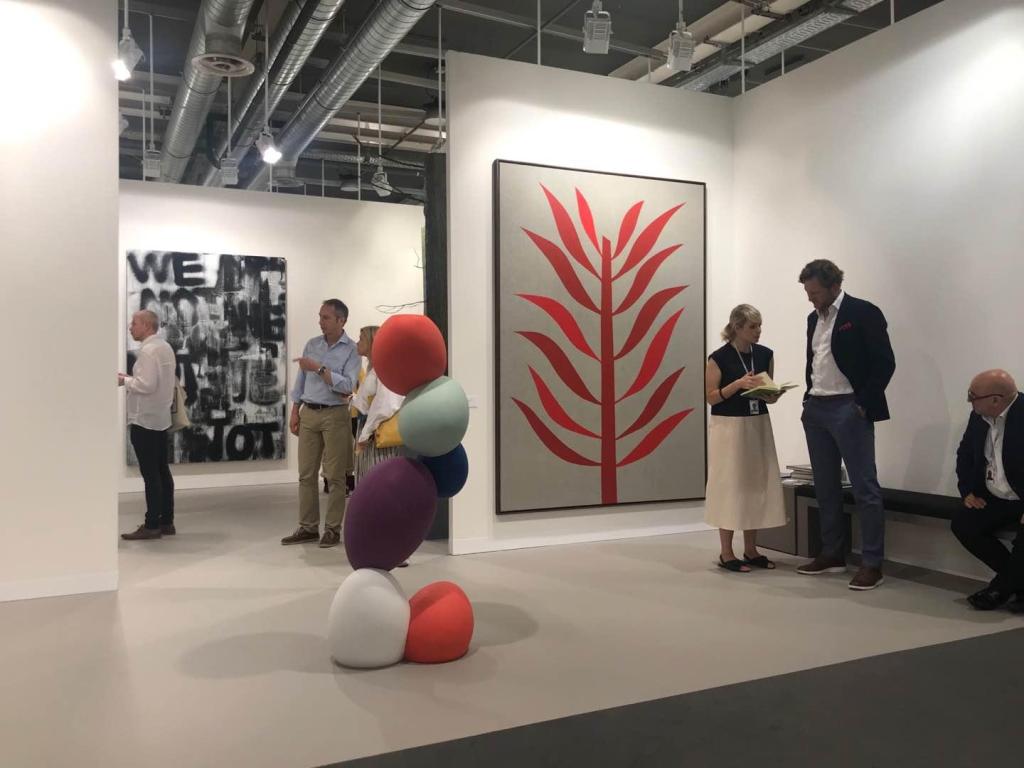
Art Basel is mainly composed of five sectors: galleries, feature, statements, edition, and unlimited. The unlimited sector is the most popular one, because this exhibition includes large-scale installation artwork, live performance, massive sculpture and painting. In other words, it is perfectly suitable for Instagram posting. My trip also starts from this sector.

Fair is open at 11:00 AM, but one hour ahead of the opening time, there are already lots of people gathering in front of the hall, and some people were sitting inside. Few minutes to 11:00, visitors are waiting and talking in front of the gate excitedly and I am one of them.

I stayed in this sector for one hour and a half. It is an enormous space with many pieces of artwork scattered around. Some of the artwork needs to line up for a while. After viewing all the artwork, I have to say that it is not amazing enough for me. Some artworks are made for catching up with the trend rather than expressing meaningful and thoughtful messages. Buzz words like VR and minority group are used by several artists to show off their updated awareness towards to the world trend. However, the overall organization is quite impressive. There are enough seats for visitors to rest. The organizer also leaves enough space among each artwork, so that people can stop and discuss without bothering the following visitors. Each artwork is numbered and provide a description paper. Volunteers are also standing next to the artwork, who you can ask without hesitate. 

After the unlimited sector, I move to Hall 2, where has galleries, statement and edition located.

The galleries part’s excellence exceeds my expectation. Here you can have an overlook of the worldwide art gallery scene. There are galleries that sell blue chip artists’ artwork, for instance, Picasso, Degas, and Monet. Moreover, some galleries bring up fresh and emerging artists to the audience. You will never feel bored while walking around. Every booth contains its own tiny world. 

The most eye-catching gallery must be Jeff Koons’s artwork Sacred Heart at Gagosian’s booth: a large pink heart with a yellow ribbon. The smooth surface works like a mirror to reflect the people approach it. Security staff in a black suit and stands still beside this pink heart. At the same time, people are changing their poses and facial expressions constantly in order to get the best photos of the day.

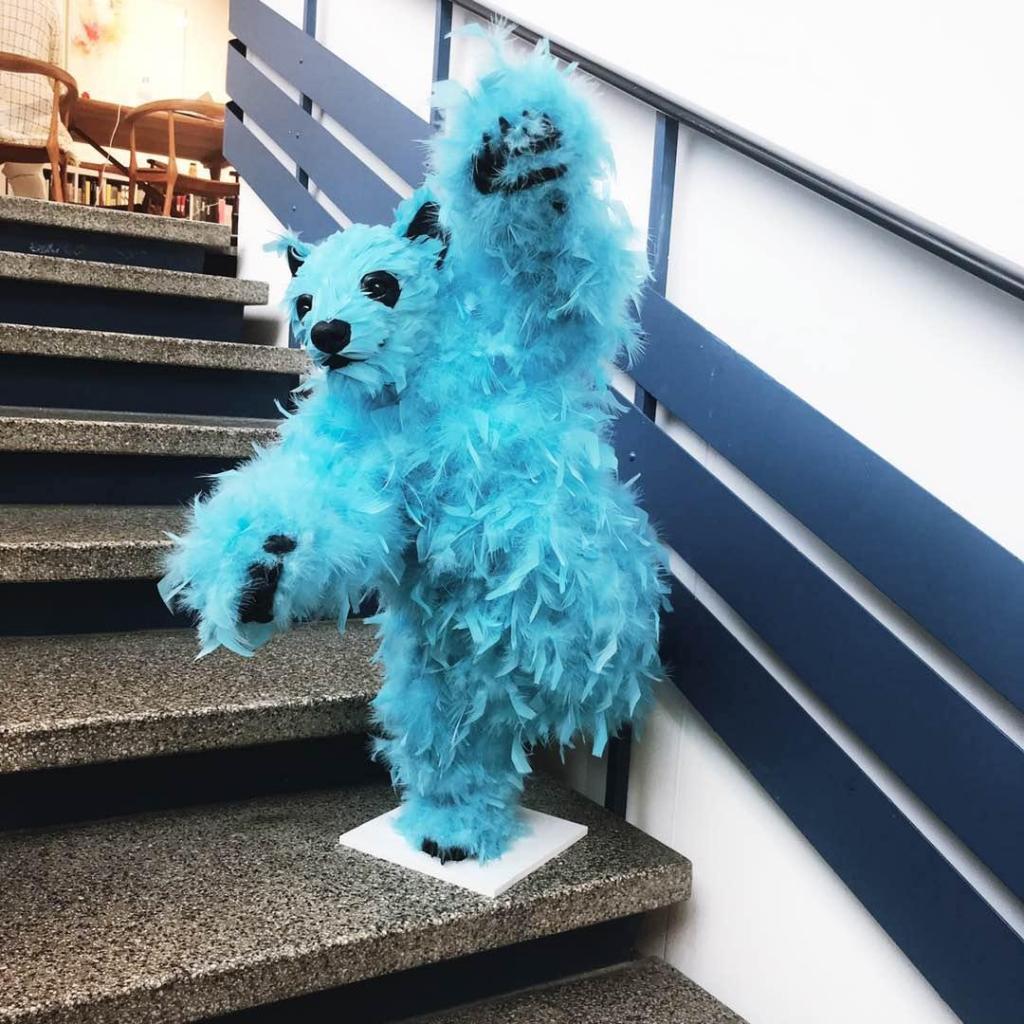
There is a gallery that lights up my day, which is Perrotin Gallery. Perrotin divides their booth into several rooms, and each room has painted in different colors to match with the theme. Their booth has three floors, and artwork is placed in every empty space, like the corner and along the stairs. I am so happy when I saw the artwork from Italian artist Paola Pivi. Colorful polar bears were dancing on the stairs to welcome the visitors.

I only leave one day for Art Basel, but one day was definitely not enough for me to look through all the galleries. The fair organizer has forecasted this situation, so that visitors can easily find empty seats to rest and find food truck/booth to order some snacks and drinks for refreshment. 

Except for Art Basel fair, Basel city has lost of other events and important exhibitions hold at the same time. Nearby the Art Basel Hall, there are several art fairs with various styles, including Volta, LISTE, Photo Basel, Scope and Design Miami. 

Basel in June is a feast of art waiting for you to explore. 

WORDS BY LOU YILUN

美術手帖|主策展人与研究员之间的10倍工资差,是时候谈谈艺术界的薪酬问题了

美术手帖于2019年7月1号发布于(翻译)

https://mp.weixin.qq.com/s/GRwL2atjgFUrNlwzl7pQhQ

5月31日,费城艺术博物馆策展人在互联网上公开了一份名为《艺术与博物馆薪酬透明2019》的谷歌文档。这个文档包含了主要美术馆和画廊等艺术从业人员自己申报的薪酬数据。这个文档一瞬间就传遍了全球艺术界,并引起关于“薪酬透明化”的讨论。相关数据都揭示了哪些问题?我们来一起回顾事件的经过和背景。

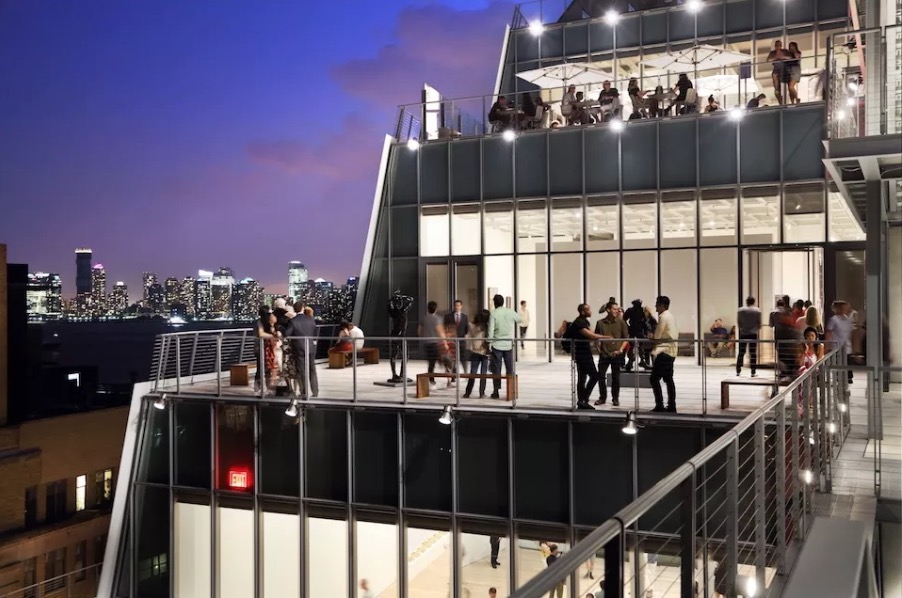
惠特尼美术馆外观 Photo by Ed Lederman © 2016

《艺术与博物馆薪酬透明2019》公布者是费城艺术博物馆欧洲装饰艺术与设计部门策展助理米歇尔・米勒・费雪(Michelle Millar Fisher)。费雪曾在纽约现代艺术博物馆(MoMA)、大都会艺术博物馆和古根海姆美术馆任职。她说:“在多年以前,我就开始思考薪酬透明和多因素导致的酬劳不平衡问题。在那之后的每次职业交流会上,我都会分享自己迄今为止从事过的工作的薪酬。”在今年,费雪据说受到策展人金柏莉・德鲁(Kimberly Drew)做的类似尝试的鼓舞,所以就和同事一起制作了这个文档并公之于众。

《艺术与博物馆薪酬透明2019》将艺术从业人员的薪酬情况收集并公开。数据提供采用不记名方式,有工作地点/工作机构性质(美术馆、画廊等)、职位、部门、国家与城市、起薪、当前薪水、雇佣性质、奖金、工作年数、孕假、性别、种族和学位等栏目可以输入。会暴露数据提供者身份的信息则不需要提供。

到现在文档已经公布了三周左右(译注:原文发表截点),已经有2500多条录入。大多数来自于美国,也有欧洲和亚洲的数据。除了艺术行业内的各种职位的薪酬、还有在企业收藏、博物馆和动物园工作的人们提供的信息,即便是对想要了解文化机构相关工作的人来说也是有用的数据。

以纽约的策展人为例

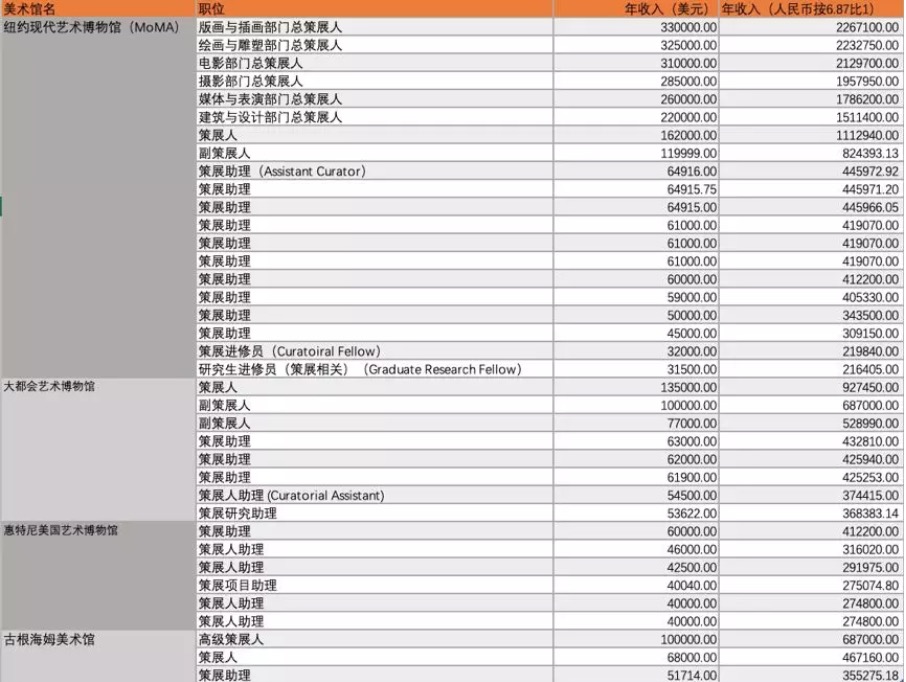
举个例子,从纽约的策展人方面来分析一下该文档数据。本文选取的数据是纽约现代艺术博物馆(MoMA)、惠特尼美术馆、大都会艺术博物馆和古根海姆美术馆策展相关职位人们的最新薪酬(未提供最新薪酬的、以小时计酬的数据除外)。

以《艺术与博物馆薪酬透明2019》为基础做成的图表(职位沿用原数据。于6月17日提取数据)

最引人注目的是纽约现代艺术博物馆的主策展人薪酬。在其他美术馆数据不足的情况下,难以判断薪酬是否过高,但是依然是高薪职位。

同一家的美术馆的研究员与主策展人之间有10倍的薪水差异。以这个数据为契机,人们对从研究员到主策展人需要多少年,职业发展路径图是怎样,需要在怎样的竞争中脱颖而出等问题津津乐道。

大都会艺术博物馆的数据中,8个里有5个提到“就职需要有博士学位”。和其他的美术馆比起来要严苛地多,但学历上的优势并没有反映到薪酬上。

和其他的专业一样,美国的艺术系学位的学费并不便宜。去哪个学校,家在哪里,是否获得奖学金等因素虽然会大幅度影响求学成本,但若要取得知名私立大学的研究生学位,光是学费就要20万美元左右(约为127万人民币)。

除了纽约的生活费,这个数字还要考虑到花费的教育成本和学贷的偿还等。此外,纽约平均年收入为6万9932美元(约为48万人民币),但是列表中大多数职位的薪酬低于平均。

无酬实习的情况

美国大学生取得学位一般需要有实习经历这一项。但是艺术界的实习大部分都是没有报酬的,对此“恶习”的抗议声比之前更大了。

《艺术与博物馆薪酬透明2019》里美国国内实习数据有55条。其中,17条有报酬,38条无报酬。知名美术馆的实习大多是没有报酬的。

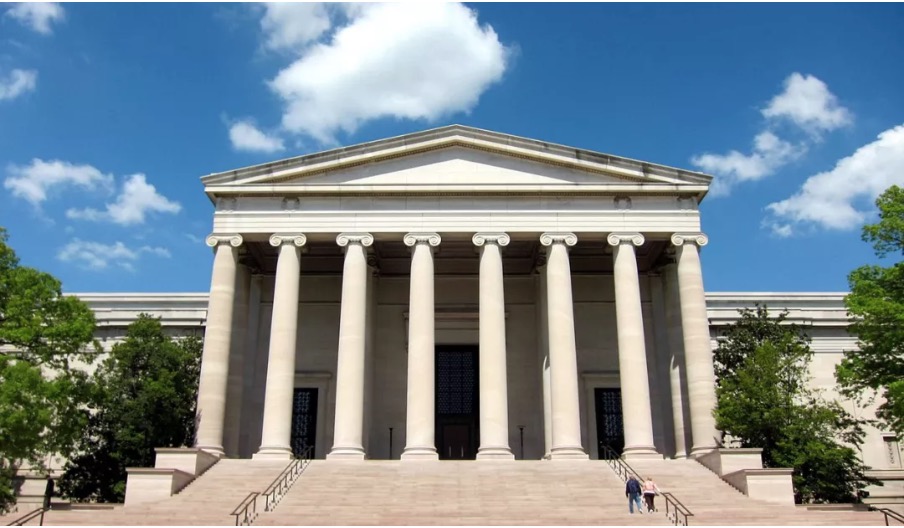
在带薪实习中薪酬最高的是国家美术馆(华盛顿DC),月薪3200美元(约2万2千人民币)。接下来是保罗・盖蒂博物馆(洛杉矶)年薪为3万美元(约20万6千人民币)。其他的多为按时计薪,每小时在9-20美元之间(约62-137人民币)。

国家美术馆(华盛顿DC)外观 图片来源=Wikimedia Commons

超级画廊高古轩的时薪为13.50美元(约93人民币),卓纳画廊为11美元(约76人民币)。考虑到纽约市最低时薪为15美元(约103人民币),这些画廊的时薪都低于最低工资。因为实习生不是正式员工,把时薪限定在最低工资标准以下本身虽然没有问题,但这个现状很有可能是“把免费当作理所当然”的业界惯例所导致的。

严肃的讨论和改变的开始

《艺术与博物馆薪酬透明2019》的发起人费雪对ARTnews表态:“希望这个数据可以成为一个契机,让同行之间开始对话。如果不行动的话,什么都不会改变。有时候,即使是小小的行动也会带来转机。团结一致是催动巨大的改变的唯一办法。”

该文档里的样本因为需要保护隐私,信息不足,难以支撑深度分析。但是这对艺术界在推动劳工关系问题的解决和改善的讨论上是重要且珍贵的数据。如果要考虑性别和种族因素的话,还需要更多的样本,丰富的数据是激活业界讨论的不可或缺的一环。

迄今为止的艺术行业有“供过于求导致的激烈竞争”“除了经验之外人脉也很重要”“利用劳动者的热情压低薪酬”“富人们的社会实践,对薪水的谈判并不重视”等很多要素导致了低薪与薪酬不平衡。《艺术与博物馆薪酬透明2019》并不能给以上推测下定论,但仍然给了很多人重新思考的窗口。

翻译=娄依伦

美術手帖|艺术与艺术家应有的姿态,克里斯蒂安・波尔坦斯基专访

美术手帖于2019年6月28日发布(翻译)

https://mp.weixin.qq.com/s/ehKawMp-ST0z1YHPz11Ipg

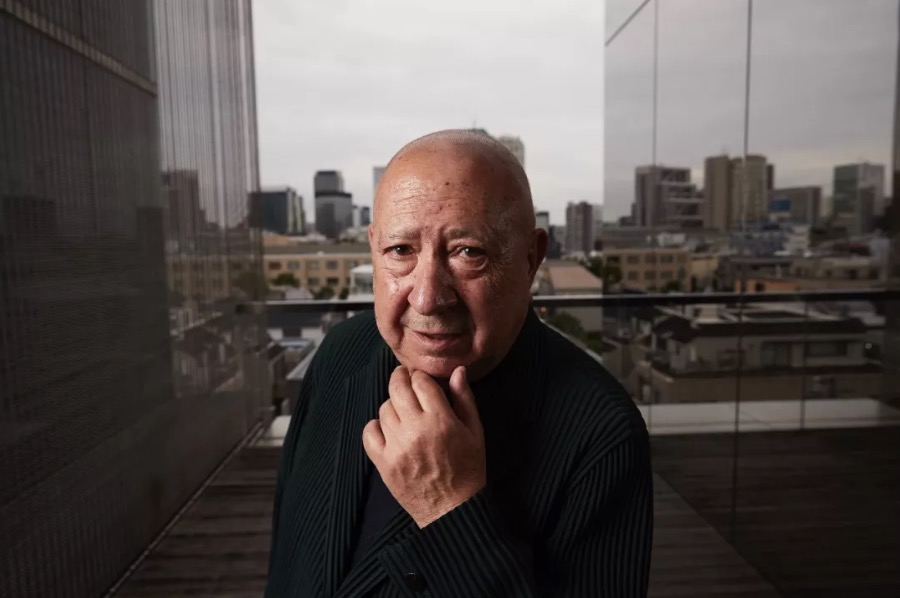
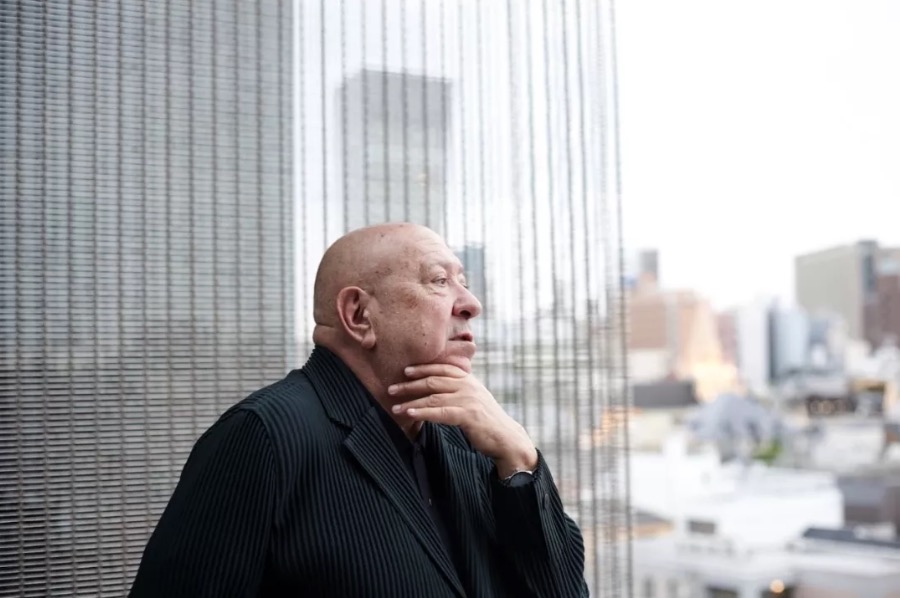
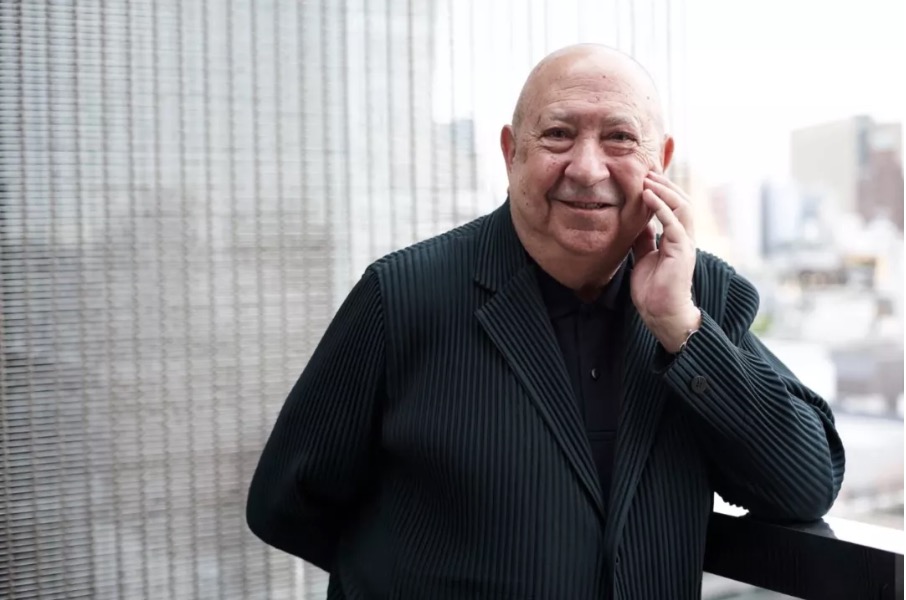
克里斯蒂安・波尔坦斯基(Christian Boltanski)在日本举办历年来规模最大的回顾展“Lifetime”(国立新美术馆)的同时,在东京路易威登艺术空间(Espace Louis Vuitton Tokyo)也推出了一个聚焦于影像装置作品的个展“Animitas II”。围绕本次两个展览,2016年策划了波尔坦斯基个展的东京都庭院美术馆策展人田中雅子,和他聊了作为“神话”的“Animitas”系列和关于艺术本身的思考。

克里斯蒂安・波尔坦斯基 摄影=稻叶真

成为神话的“Animitas”

——首先我想先聊聊路易威登艺术空间里的绝对主角——系列作品“Animitas”。以智利的阿塔卡玛沙漠(Desierto de Atacama)为开端的该系列作品是如何被创作出来的,以及又是如何完善的?
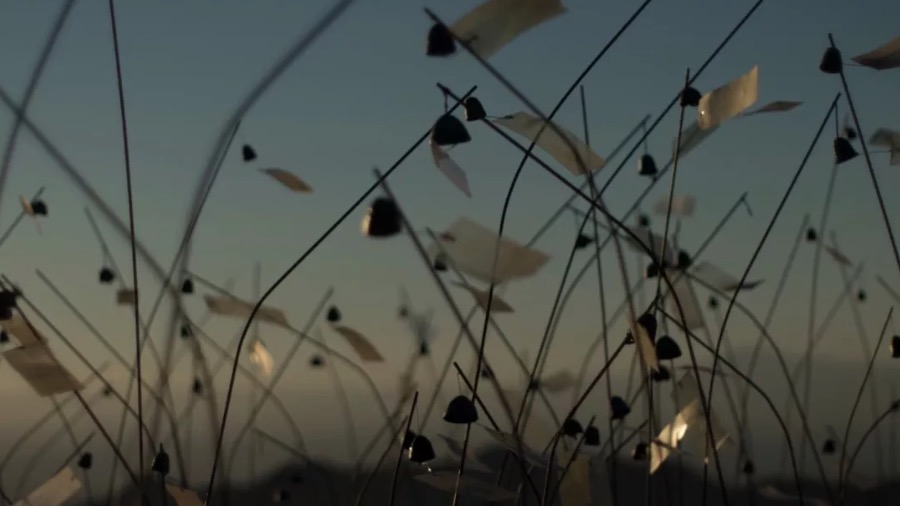
阿塔卡玛沙漠是一个特别的地方。海拔高度为4000米,是世界上最为干燥的地方。在那里能够更直接地感受星星与天空,也有天文观测站设立在那里。在同一地点也埋葬着因智利军事独裁政权而牺牲的人们,汇聚着他们的亡灵。因此在那谁也找不到的地方创作了作品,而且那件作品也已经悄无声息地消失了。

Animitas(智利) 2014 full HD视频、彩色、声音 13小时6秒 Courtesy Marian Goodman Gallery and Fondation Louis Vuitton © Adagp, Paris 2019 Photo by Francisco Rios

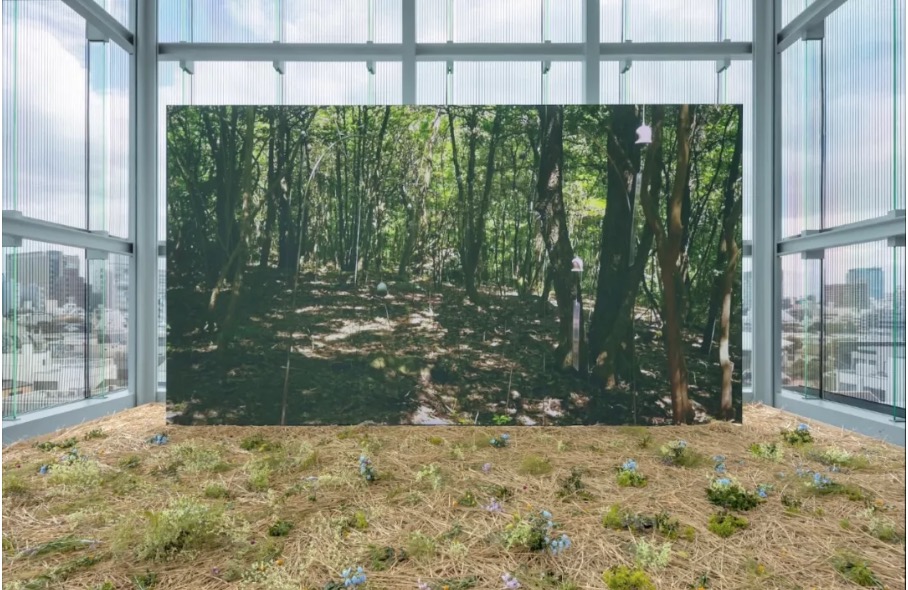
在那之后,我又制作了三件《Animitas》,分别在以色列的死海、加拿大魁北克的雪中和日本丰岛。其中,位于丰岛的作品与其它几件作品略有区别,是现在唯一保留下来的作品。

我相信有灵魂的存在,“Animitas”就是一系列和灵魂有关的作品。我用固定摄影机记录下从日出到日落一整天的影像。每个地方对我来说都有象征意义。阿塔卡玛沙漠离星星很近,魁北克是能到达的最北的地方,死海对所有宗教来说都是重要的地点。丰岛对我个人来说是很重要的场所,我希望《Animitas(呢喃的森林)》和《心跳档案馆》能变成圣地一样地方。

——如果“Animitas”系列和迄今为止的作品相比较的话,感觉它更加沉稳、更加寂静,能触动观赏者的情绪。

这的确是一系列沉稳的作品。在战争的日子结束后,进入另一个地点——死者的世界——存在的感觉。这不仅仅是影像作品,也是一件装置作品。不单单只是站在作品前,而是要进入它。这就是我所设想的效果。

——国立新美术馆展示的影像装置作品《Misterios》(2017)和“Animitas”一样,也是将目光投向了自然,也就是人类的外部环境。这可以说是一脉相承了?

《Misterios》是在巴塔哥尼亚拍摄的,那里的原住民认为鲸是能感知时间开端的动物。巨大的筒状喇叭一样的装置,风穿过其中就能发出“鲸的语言”。这当然是虚拟的,我想向鲸询问“我们为什么在此时此地?”。

无论是《Misterios》还是“Animitas”,我都称他们为“神话”。在多年之后,这些巨大的圆筒会因为大风而被摧毁。我的名字也湮没成灰。但是,巴塔哥尼亚地区的人们会口耳相传说“有个男人来到这里,与鲸鱼对话了”。这没准就变成了一个“传说”。

在丰岛的《Animitas(呢喃的森林)》(2016)和《心跳档案室》(2008)也是一样,“这是艺术家波尔坦斯基的作品”这句话有一天会被忘记,但那个场所却成为古老的寺庙和神社一样的圣地。日本的普通人在不知道我是谁的前提下,为聆听祖先的心跳声而来到这里。

东京路易威登艺术空间现场,《Animitas(呢喃的森林)》(2016) Courtesy of the Fondation Louis Vuitton Photo by Jérémie Souteyrat © Adagp, Paris 2019

艺术家应持续发问

——您经常说“通过作品来提出问题是非常重要的”。这并不是一件简单的事,您是如何能做到持续发问的呢?

这个世界是非常残酷的。我虽没有什么宗教信仰,在我们之上如果真的存在着某种力量的话,那股力量为什么要任凭可怕的事情发生呢?追求真理是人类精神的一部分。每一个人都想弄明白为什么会有那么多可怕的事情,为什么有死亡的存在呢。

我对此也没有答案。或者说“知道答案”的人反而十分危险。如果说为什么的话,这是在强迫他人。人类这种生物就是喜欢寻找答案。犹太教有句话说“小孩子有着所有问题的答案”。胎儿本知道所有东西,在诞生的时候天使过来了,让他忘记了所有的事。所以他会花费一生的时光去回想在腹中时曾拥有过的答案。“所有的胎儿拥有所有的知识”这个传说我非常喜欢。

——死的时候也许也找不到答案呢。

我觉得也许会更靠近答案,但是无法找到答案。

克里斯蒂安・波尔坦斯基 摄影=稻叶真

艺术之美在于其不正确性

——您经常强调独属某个场所的记忆。这次开幕的“Lifetime”展与“Animitas Ⅱ”展在准备时有什么注意点吗?

这次的展览和2016年于东京都庭园美术馆举办的展览稍有不同。庭园美术馆是一个有历史的场所,但是这次的展览都是在白色空间内。尤其在国立新美术馆,我看了建筑后,想要创造一个通道,然后就有了“有开始也有结束——通过通道”的灵感。

比如说在意大利和西班牙的教堂里,门敞开着,进入后就能看到神父,还有教堂独有的味道、声音和装饰画。我并不信教,所以对教堂的仪式也不了解。但是,却能感受到“这是一个思考的地方”这点。所以,进入教堂后坐10分钟,开始思考我们是什么、为什么身处这里。然后,出门后便回到自己的生活中去。

这样的场所是很有意义的。我觉得现在美术馆可以被当作新的教堂。教堂是思考的场所,美术馆也有相似的作用。现在的有权势的人并不兴建教堂,而是建造美术馆。这样的场所对社会来说是必不可少的,是探索自己的内心,从精神的源头汲取营养的必要场所。

——东京路易威登艺术空间在空间设计上有步移景异的特征。

的确是这样,刚开始打算建造一个观看影像的箱型空间,后来我放弃了这个方案。希望画廊外的东京都市风景也被纳入展览之中。这样就能让大都会和自然之间产生对话。对我来说,周围环境也很重要。

东京路易威登艺术空间现场,《Animitas(死去的母亲们)》(2017) Courtesy of the Fondation Louis Vuitton Photo by Jérémie Souteyrat © Adagp, Paris 2019

——您希望日本人能对该展览会产生怎样的共鸣呢?
我经常旅行,也在不同的国家举办展览。每个地方的人们都透过自己文化的滤镜,用不同的方法去欣赏我的作品。然后最后都接受了我的作品,理解了应该理解的含义。让我感动的地方就是:即便对方是来自另一个文化的人也可以与作品交流。

就像杜尚说的那样,每个人都借着自己的经历使得作品得以完成。比如我们去电影院的时候,即便观看的是同一场电影,也会产生不同的看法。面对同一部电影,每个人也有自己的解读方法。

——“每个人都借着自己的经历使得作品得以完成”这句话也适用于其他艺术家的作品吗?如果观赏者得出的结论与(艺术家)最初的想法完全不同的话,也没有关系吗?

我觉得这句话对所有作品都适用。每个人都接收到他应该接收的东西。然后我所抛出的问题也和会下一个问题相连。

艺术的美妙之处就在于其不正确性。艺术只要给一些刺激,观赏者就会在这刺激之上加上必要的东西,再重新建构这件作品。艺术并不会变得更先进。当前的艺术并不比300年前的艺术更优秀,只是使用的语言不同而已。但仍然在抛出同样的问题。在这个层面上,我也算不上当代艺术家。

Animitas(智利) 2014 full HD影像、彩色、声音 13小时6秒 Courtesy Marian Goodman Gallery and Fondation Louis Vuitton

好的艺术家在探索中生存

——您在过去说过“艺术家不应当是专业的”,这句话能详细说一说吗?

最近的年轻艺术家为了获得世俗的成功,有以成为专业的艺术家为目标的倾向,我对此感到很有危机感。因为艺术是对内心的探索——能成功固然很好——成功绝不是关键。我只是恰巧赚了很多钱,虽然很开心,但是赚钱本身比成为好的艺术家要简单很多。

我执教20多年,但是真正意义上的艺术家只遇到过5人左右。艺术对他们来说就是命运一样。成为好的艺术家的必须项不是勤奋。在艺术学校学习也不一定有用。对于艺术家来说,重要的是等待。对内的思考是必要的。

与我年轻的时候比,艺术界和金钱的关系发生了变化,联系更加紧密了。波西米亚式的世界远去了,艺术家和其他的职业没有什么不同。我很喜欢贾科梅蒂,他总是呆在蒙帕纳斯,很少离开自己的画室。晚上制作雕塑,白天和妓女一起疯狂喝酒,然后到夜里为追求更好的作品而继续雕刻。画室之外的生活就如乞丐一样。

——对于你来说,好的艺术家是怎样的艺术家呢?

痴迷于探索的人。学习与工作对他来说没有意义。每天在探索中活着。我对学生说“如果最新的作品被夸奖了,请先给那个人一个吻”。只有这件事是重要的。再强调一遍,对艺术家来说只有作品是重要的,这之外的东西都没有意义。

艺术家自身也会成为自己的一件作品。艺术家的梦就是和自己的作品越来越像。弗朗西斯·培根自身成为培根的作品,贾科梅蒂自身成为贾科梅蒂的作品。然后像我的话,就会和饼干盒很像,因为我在作品中使用了很多的饼干盒(笑)。

克里斯蒂安・波尔坦斯基 摄影=稻叶真

翻译=娄依伦
Profile

克里斯蒂安・波尔坦斯基

1944年出生于巴黎,现居住在马拉科夫。1967年以来,以写作、电影、雕刻和摄影为表现手法追求艺术。1972年参加文献展(德国・卡塞尔)后,在世界各地举办展览。2011年作为法国馆的代表艺术家参加了威尼斯双年展。在日本的主要展览有:“克里斯蒂安・波尔坦斯基展”(ICA名古屋、水户艺术馆,1990-1991)、“克里斯蒂安・波尔坦斯基 Animitas – 呢喃的灵魂“(东京都庭园美术馆,2016)等。也参加了第一届大地艺术节・越后妻有艺术三年展。2010年的濑户内国际艺术节时在丰岛设置了《心脏档案室》。主要获奖有凯撒林奖(2001)、高松宫殿下纪念世界文化奖(2006)等。

The Development of Japanese Museums and Art Galleries

Business & art于2019年4月16日发布于

Japanese architect Arata Isozaki has generated a theory to analyse the evolution of the interior design of museums and art galleries. According to his theory, museums and art galleries over the past several centuries have diverged into three categories.

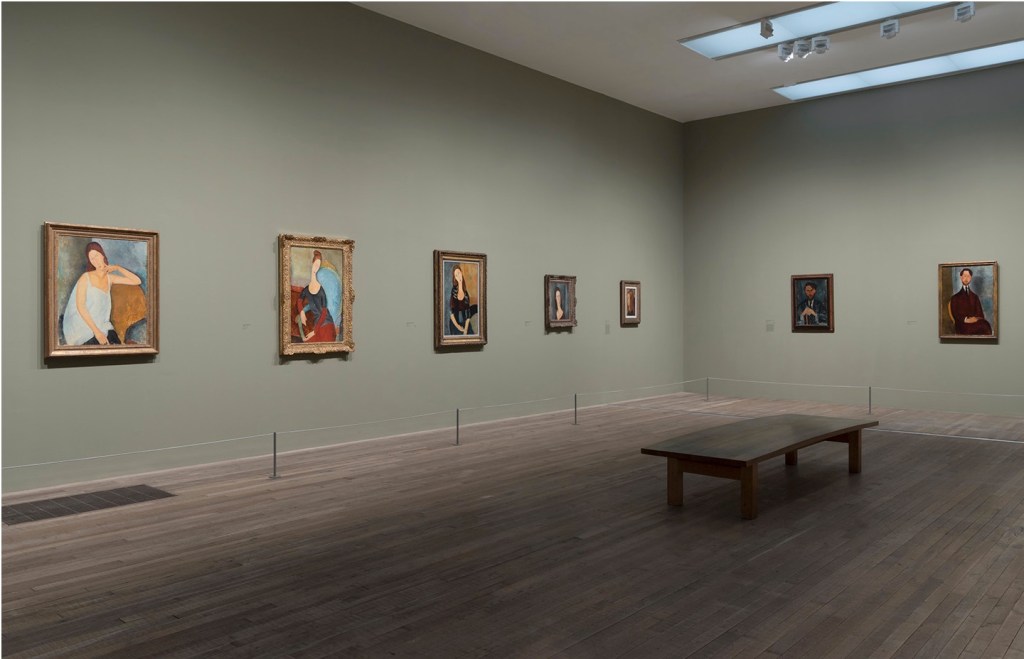
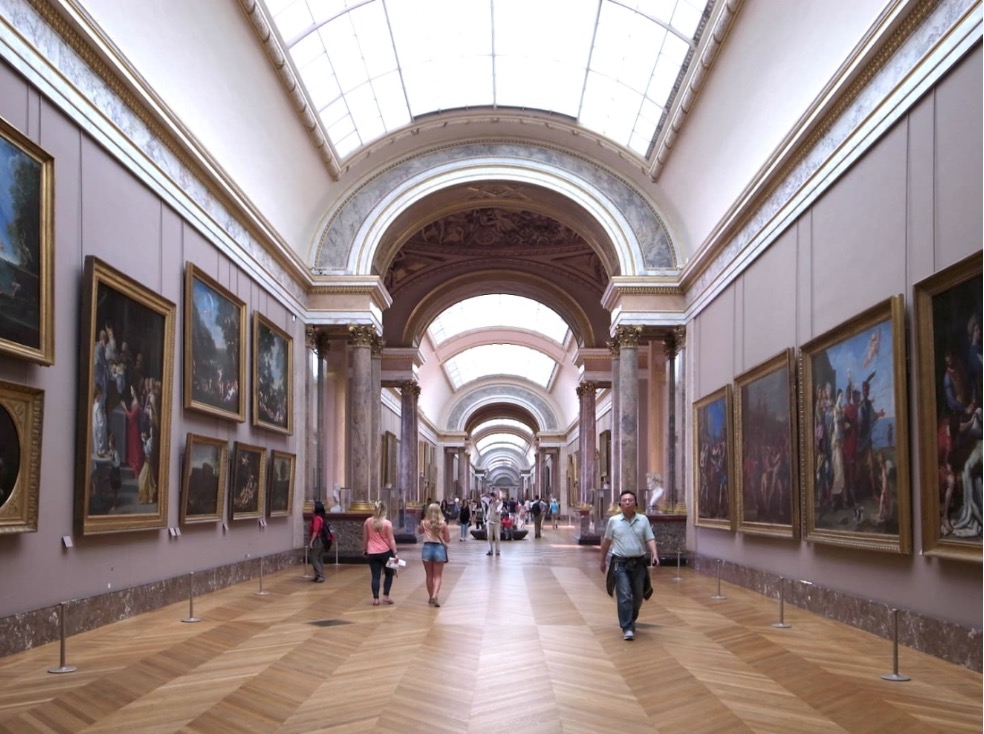
The first category refers to museums established by the 18th century. This type of museum’s primary purpose is to show the art collections from noble people, for instance, Louvre Museum. The features of such a museum are old-fashion coloured walls and heavy frames with elaborate decoration. The permanent collection constitutes mostly of art pieces from old masters.

Louvre Museum

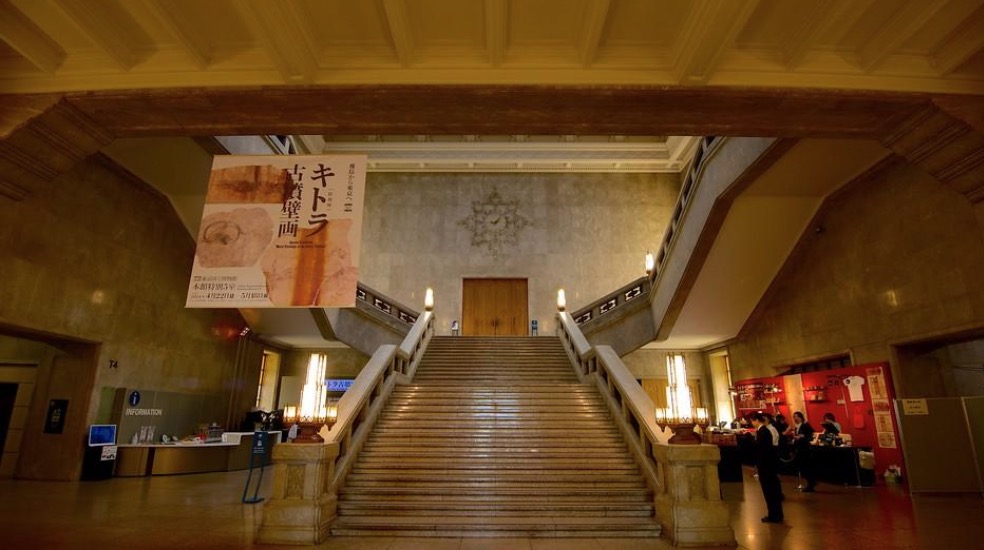
National Museum of Tokyo

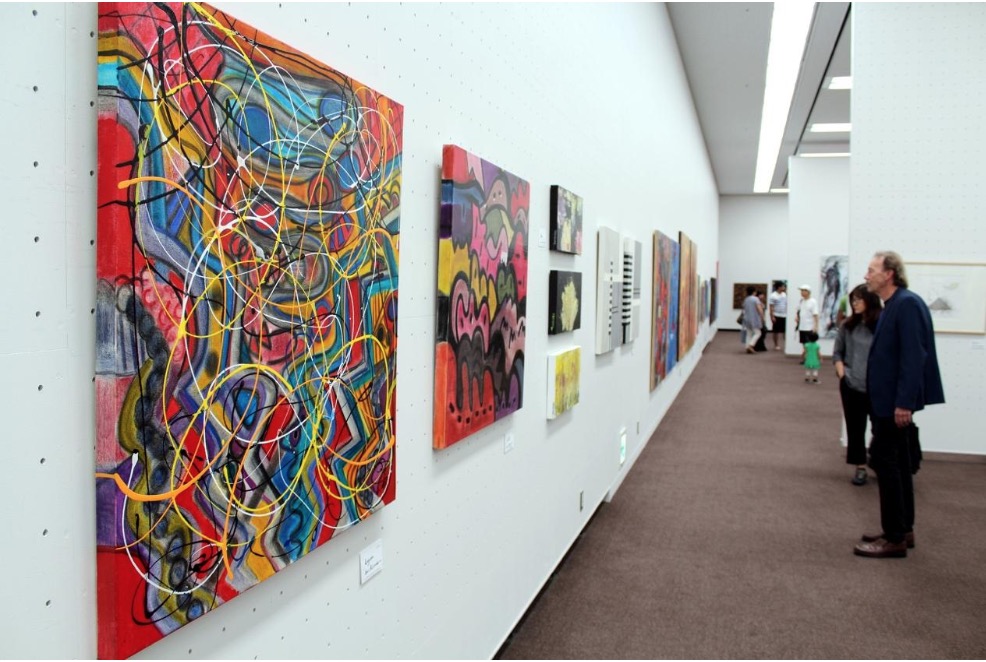
The second category includes museums and art galleries that exhibit modern and contemporary artwork. In these, the interior design is simple and modern. These spaces are categorized by white walls, which is why they are also called “white cubes“.

Tokyo Metropolitan Art Museum

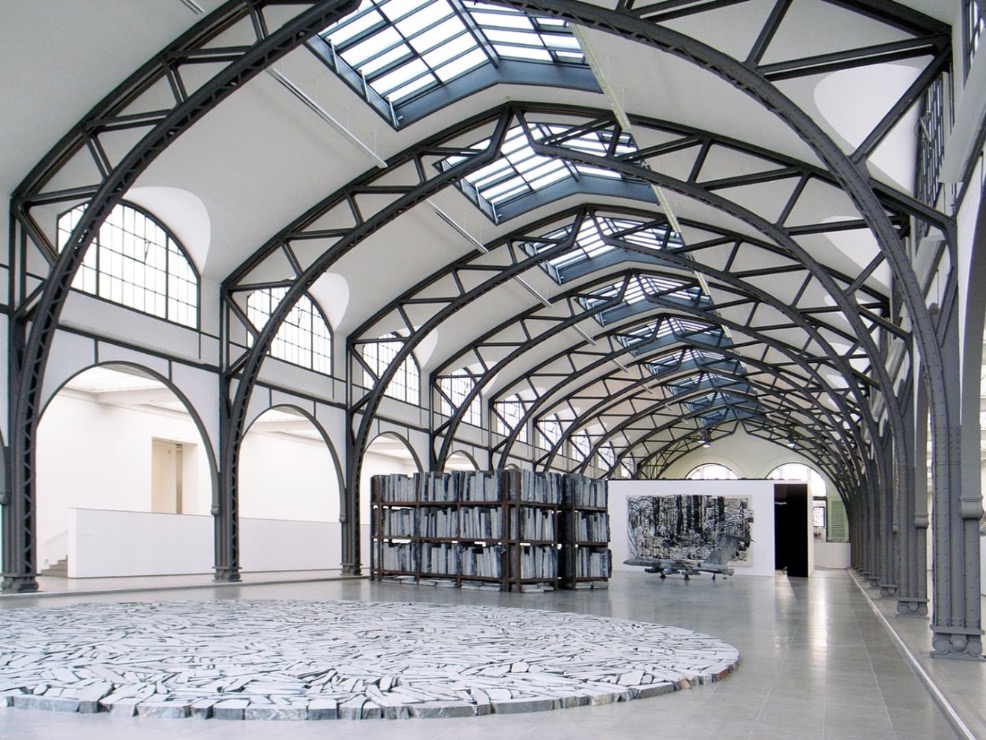
The third category is artist-centered and pays more attention to the architectural design. It is marked by two distinguishing features. The first is collaboration among artists and architects; architects generate the museum concept and design based on the artist’s style and work. This kind of exhibition space is characterised by a strong visual impact from the outside, as well as perfect harmony between the art collections and the buildings they are housed in. The second feature is founded on the concept of renovating abandoned historical buildings, including factories and train stations. These buildings have high ceilings and enormous spaces, therefore meeting the common exhibition space needs. Transforming the abandoned buildings into cultural institutions gives them new life, therefore promoting the concept of recycling and encouraging innovative ideas.

Hamburger Bahnhof

The fourth and the last category adds a new element to the museums and galleries: the “human” one. This characteristic (that isn’t part of Arata Isozaki’s theory) made its first appearance on the International Art Festival of Japan. For example, the Echigo-Tsumari Art Triennale that’s located in a rural village in Nigada province of Japan. The artwork exhibited in this festival is mostly site-specific and located in the outdoor environment. Moreover, the festival is keener on the process of making artwork, compared to the final result. It is a collaborative process in which local people living nearby participate and join the artist in bringing a vision to life, other ordinary people then come and visit the art. Thus, in this instance, art superseeds its original boundaries and influences a society as a whole.

Professor Kurakuma Sumiko from Tokyo Art University called this emerging art scene “collaborative art activity” and summarised its main features: 
1.    It is focused on the process and is actively present.
2.    It considers the surrounding environment and reacts to the social situation.
3.    It is open to feedbacks and influence.
4.    It attracts diverse people.
5.    It plays the role of a social activist.

Echigo-Tsumari Art Triennial

After doing research about the development of Japanese museums and art galleries, I feel the enormous public need for art. This has led to the speedy, development of museums and art galleries in recent years. Art, as a tool of expression, is no longer only mastered by artists like painters and sculptors; ordinary people are getting the opportunity and confidence to express themselves with the help of art professionals. 
At the same time, I have to admit that the impact of collaborative art activity is still small. White cubes and old-fashioned museums and art galleries enjoy the dominate legitimising status. People are used to be appreciators and outsiders, rather than participators.

WORDS BY LOU YILUN


Observing China through a western lens

Business & art 于2019年2月6日发布于

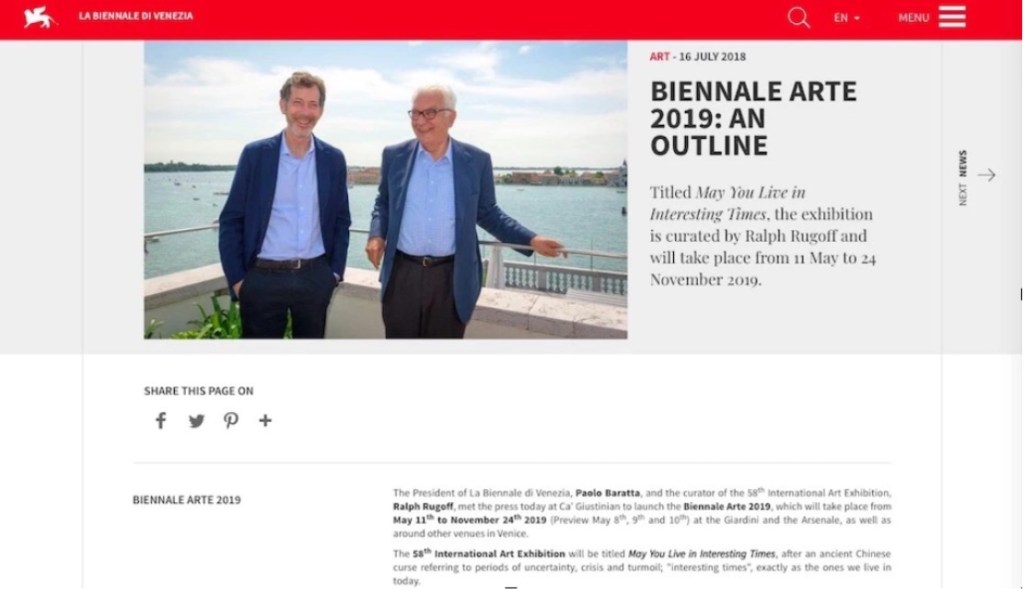
On July 16, 2018, the president of La Biennale di Venezia, Paolo Baratta and the curator of the 58th international Art Exhibition, Ralph Rugoff, met the press at Ca’Giustinian to launch the Biennale Arte 2019, which will take place from May 11th to November 24th 2019 at the Giardini and the Arsenale, as well as around other venues in Venice. The 58th International Art Exhibition is titled May You Live in Interesting Times

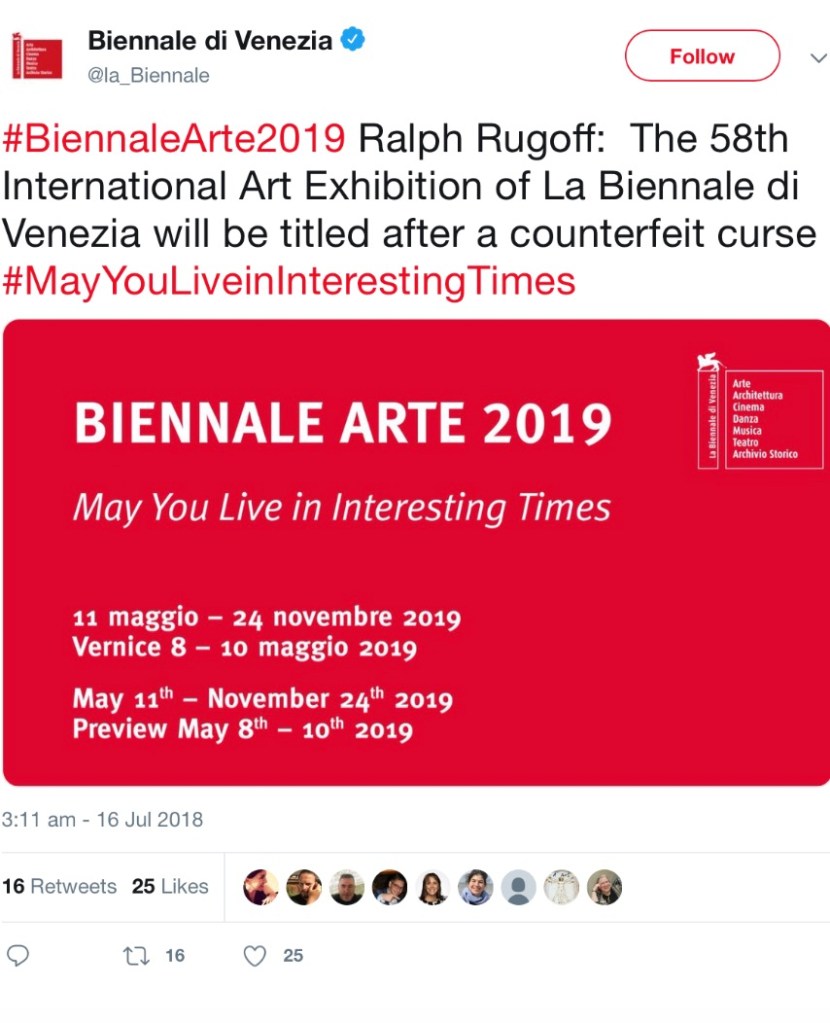
When La Biennale di Venezia first announced this title on July 16, 2018, it became a controversial topic right away. In the official La Biennale di Venezia press description, they wrote: “The 58th International Art Exhibition is titled May You Live in Interesting Times, after an ancient Chinese curse referring to periods of uncertainty, crisis and turmoil; interesting time, as exactly the ones we live in today”. Those sentences sound beautiful and elegant. Unfortunately, there is no such Chinese curse. To be more precise, May You Live in Interesting Times is not a Chinese saying or Chinese slang. Actually, it has nothing to do with China. 

Right after the La Biennale di Venezia announced its title, the Hong Kong press South China Morning Post quickly published an article against La Biennale di Venezia. The article is named La Biennale di Venezia deliberately used a fake Chinese curse, and this behavior set off the Art director of Hong Kong Art Center

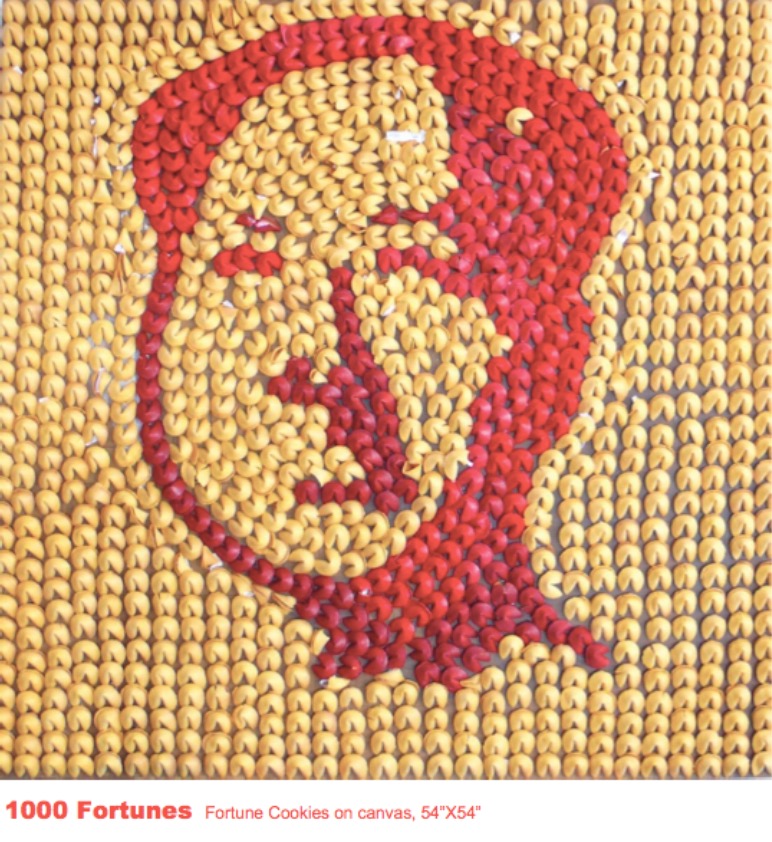
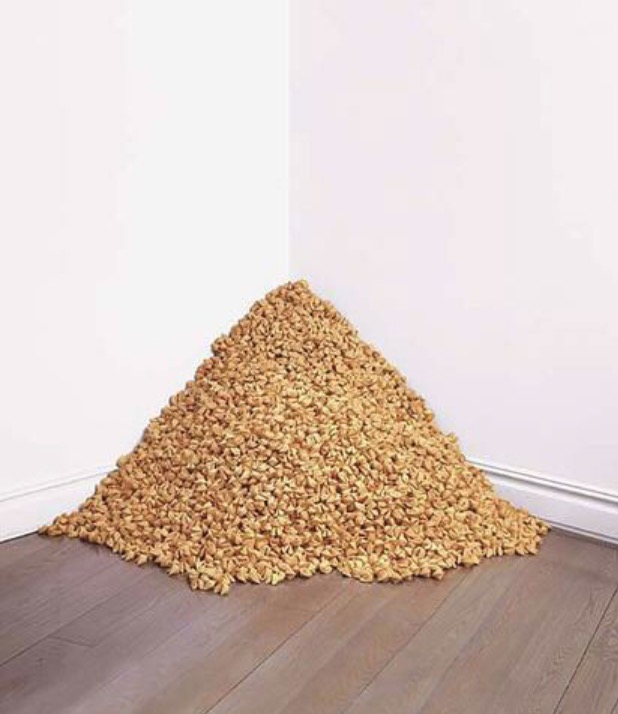
The vice curator of Chinese art of the Robert H. N. Ho Family Foundation at New Guggenheim Museum Wen Xiaoyu summarized this kind of title as a “curatorial fortune cookie”. A fortune cookie is a small dessert offered in Chinese restaurants around North America and Europe. If you break the cookie, it contains short sentences of (supposedly) wisdom. Ironically, the fortune cookie was entirely created in the West. You can’t find fortune cookies in local restaurants in China. Even in the supermarket, you can’t find any kind of cookie with a small paper inside of it.

Fortune cookies are a perfect metaphor for the following situation. Some western art curators want to show that they’re erudite or want to add a bit of mystery into their exhibition. To do that, they will use some words or stories which seem to be originated from the east. However, they do not even check their validity. 

Felix Gonzalez-Torres Untitled (Fortune Cookie Corner) 1990

On July 18th, 2018, La Biennale di Venezia’s official site changed its theme description. They wrote: ”The 58th International Art Exhibition will be titled May You Live in Interesting Times, after an alleged ancient Chinese curse, a false belief that British MP Sir Austen Chamberlain had learned of from a British diplomat, and which refers to periods of uncertainty, crisis and turmoil; interesting time, is exactly the ones we live today.” 

Then, on July 20th, 2018, La Biennale di Venezia’s official site changed the description again. They wrote: “The 58th International Art Exhibition, titled May You Live in Interesting Times, will take place from 11 May to 24 November 2019 (Pre-opening on 8, 9, 10 May). The title is a phrase of English invention that has long been mistakenly cited as an ancient Chinese curse that invokes periods of uncertainty, crisis and turmoil; interesting times, exactly as the ones we live in today.”

Yet, the above example is not the only case that shows misunderstanding and stereotypes which western people hold towards China. Similar circumstances not only happen in the art world, but also in the fashion world. 

The Chinese Spring Festival, which is often held in February, is the most important festival for China, just like Christmas in Europe. Well-known luxury brands always aim at promoting themselves during this important period. They will shoot special posters and introduce a limited version of clothing and bags. But the outcome is not always satisfactory. 

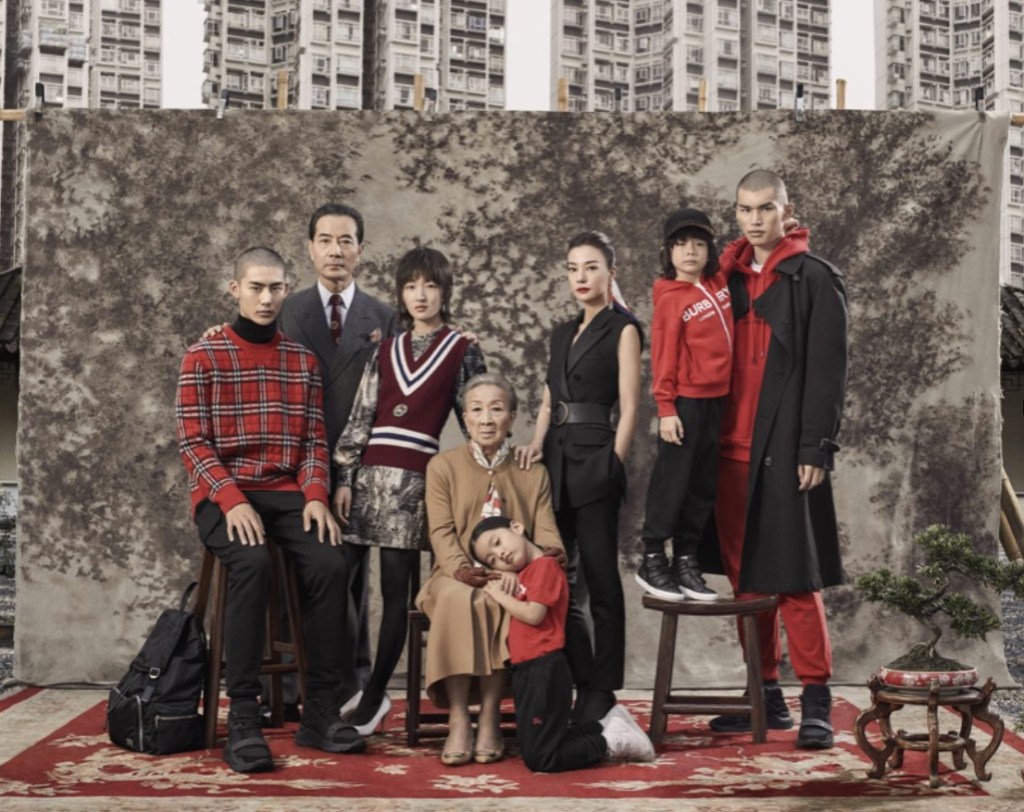
Luxury brand Burberry published its new year advertisement at the beginning of this year. In the poster, Burberry aimed at presenting a sense of family. Yet, because the facial expression in this ad is cool and poker face, the Chinese audience could not understand the initial purpose of this advertisement. On social media, people are still teasing this ad as a screenshot of a horror movie. 

Burberry

Of course, it is never easy to understand a foreign culture, particularly between West and East, since these two culture systems are not similar at all, from their philosophy to social norms. Even the understanding within Asian countries is hard to achieve. Take Japan for example. In Japanese animation and TV drama, if there is a Chinese woman character, she must wear a red cheongsam and a two-bun hairstyle. In today’s China, no one dresses like this.


WORDS BY LOU YILUN

So is Contemporary Art actually that confusing?

Business & art 于2019年3月13日发布于

“I don’t like contemporary art, because I can’t understand it. What does the artist really want to express?” People often complain about contemporary art and its difficulty to be understood.

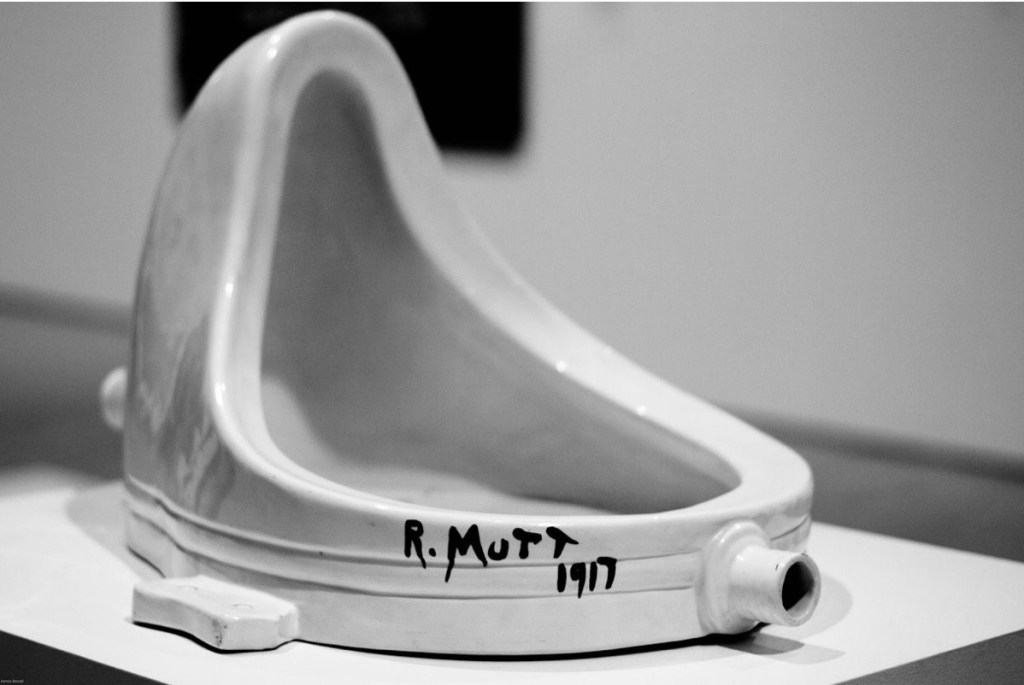
The truth is, the turning point of contemporary art history is undoubtedly the famous Duchamp fountain. He brought a readymade product from the male toilet to the exhibition space. Since then, the fine line between art and daily life was blurred.

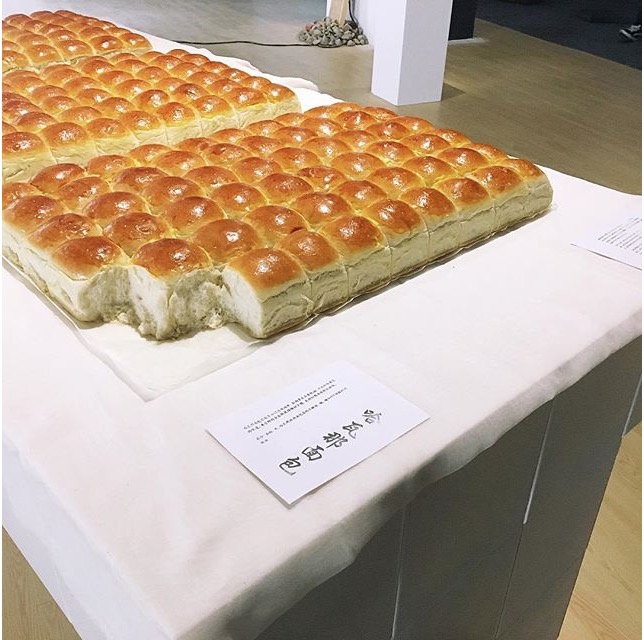
For instance, the female Chinese artist and engineer Liu Xin’s chose bread as her art medium. She follows the shape of Cuba’s national round daily bun to make her artwork Bread Havana. Like Cuba’s daily subsidized national bun, this artwork’s raw materials are imported flour, sugar, dry yeast, and water. The unique part of the Bread Havana is its flavor. In order to complete this artwork, Dana Gasiorowski from IFF (International Flavor and Fragrance) designs an essence flavor that balances the nuances of gasoline, sweat and white ginger flower (the national flower of Cuba).

The artwork is appreciated through a dining experience. Liu Xin will serve the audience with freshly baked bread. When the audience breaks the bread, bites, chews and swallows, it will notice the difference between Bread Havana and bread sold in regular stores. Bread Havana tastes like nothing but pale flour. This dull taste won’t shock the audience but drives people to think of the living conditions in Cuba.

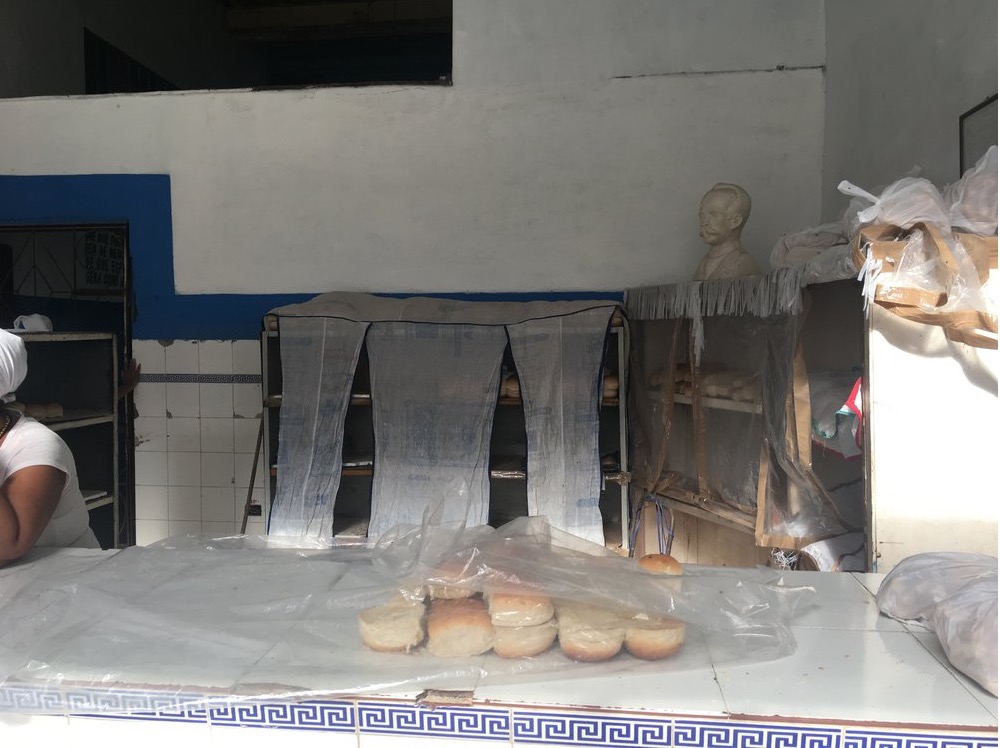
State-owned bakery in Havana, Cuba

Artist Liu Xin got her inspiration by visiting Cuba, where tourism is the third largest source of foreign currency, behind the two dominant industries of sugar and tobacco. Cuba doesn’t conceal and hide its poverty and struggles. The lack of regulation on sex work, ungovernable black markets and creaky infrastructure make of poverty and development a reason for visitors to travel.

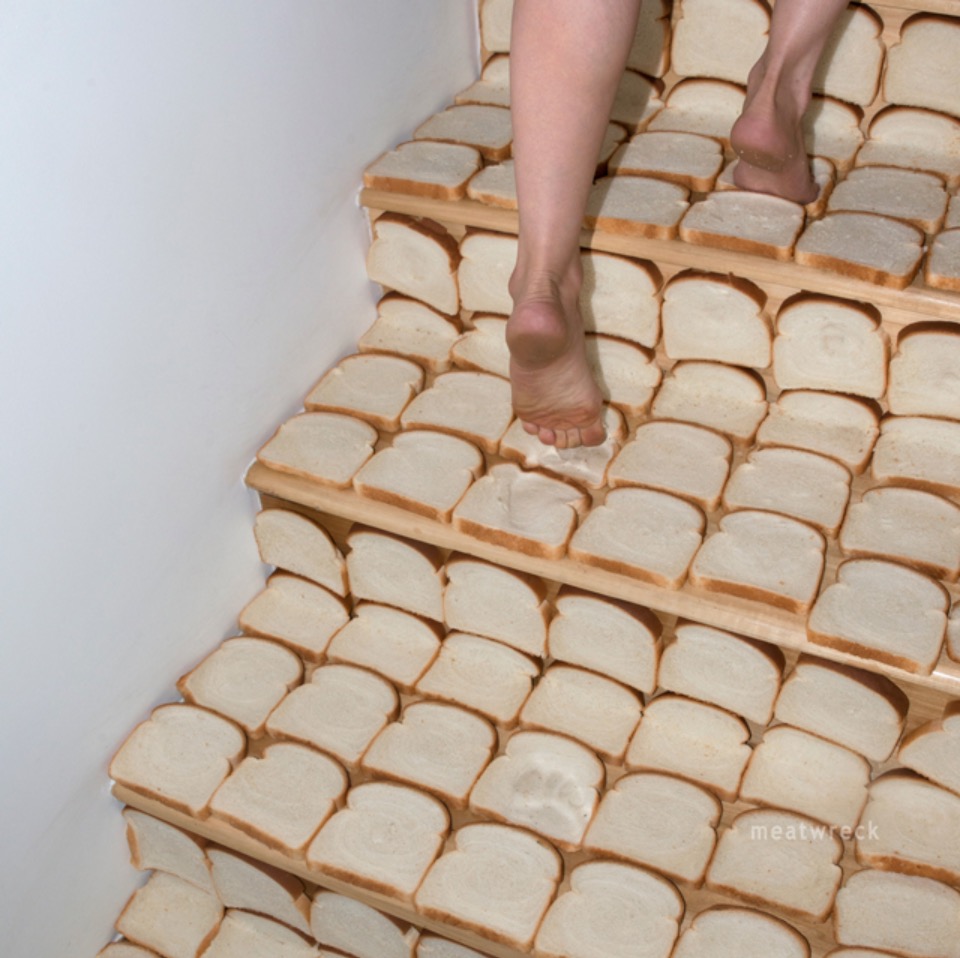
Liu Xin is not the only artist who picks daily food as a medium of expression. A couple from Los Angeles, Mitra Saboury and Derek Paul Boyleshan put toast on a staircase, then stepped on it to leave footprints. They call the footprints the trace of life.

Although artists and professionals working in the art industry may discover the artistic meaning behind those daily commodities made artworks, ordinary people tend to showcase confused faces towards them. There are two extreme cases to vividly present the confusion which the average audience experiences.

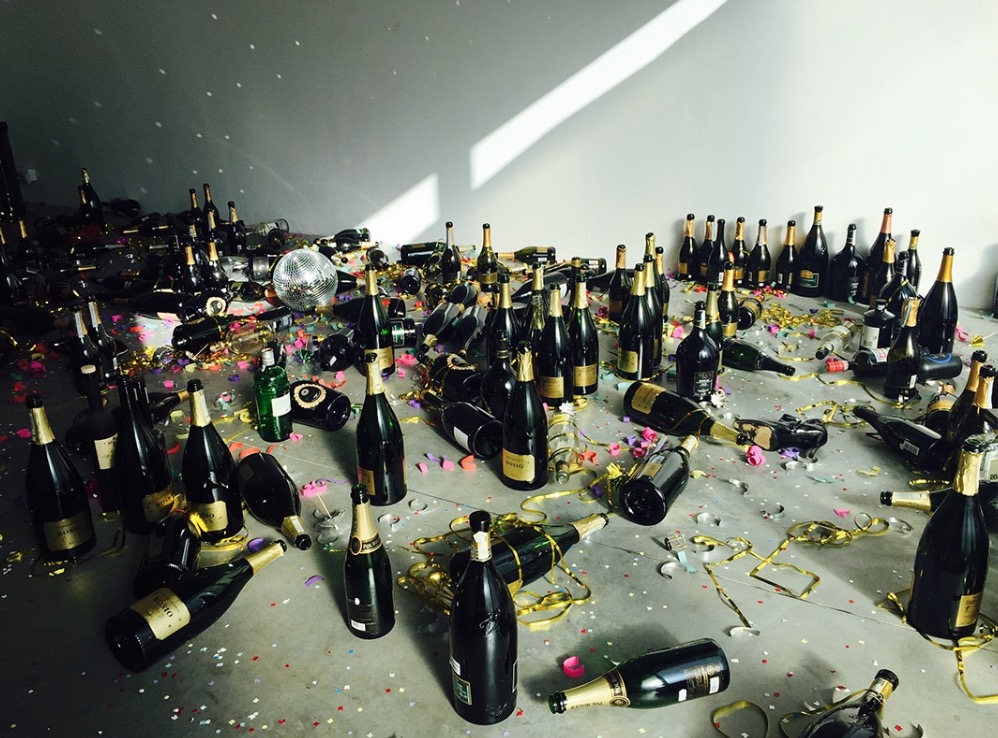
Dove andiamo a ballare questa sera? (where are we going dancing tonight?) is an art installation by Sara Goldschmied and Eleonora Chiari, a Milan-based art duo. This artwork was once exhibited in 2015 at the Museion in Bozen-Bolzano, in the South Tirol region of Italy. Through this piece of art, the artists wanted to represent the golden time of the Italian economy in the 1980s. This installation, demonstrating the mess after a party, including empty beer bottles, scattered colorful decoration papers and other trash was ironically so realistic that the museum cleaner swept it off.

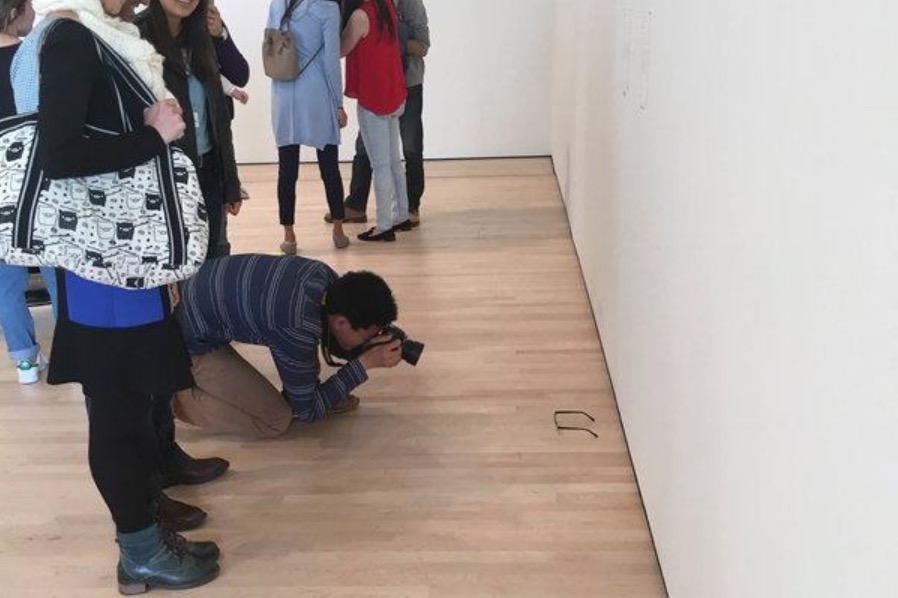
On the other hand, people often mistake some irrelevant elements or people as art pieces. In 2016, two California teenagers visited the San Francisco Museum of Modern art. They decided to play a small game to test the audience’s reaction. They placed a pair of glasses on the floor and stepped back to see how the audience would perceive them. After a while, people gathered around the eyeglasses: some people pondered over it and tried to understand it while some people kneeled down and took photos of it.

So why is contemporary art that confusing? From my perspective, one of the biggest reasons is that compared to classical art and the old masters, contemporary art is a more diversified medium of expression. As the audience is more used to a traditional way of appreciating art, in their mind, art should be a painting or a sculpture. Therefore, when the contemporary artist puts a readymade product in the exhibition space and calls it an art piece, the audience can’t fit this type of art into their pre-existing categories of what art is. In addition, contemporary art reflects the world we are living in now. In other words, contemporary artists are writing art history with their artworks. Some of them may have a long-term impact, and some of them may disappear and diminish. Therefore, it is now still too early to determine whether works can be viewed as art or not.

WORDS BY LOU YILUN

You may visit a fake exhibition

business & art 于 2018年11月7号发布于

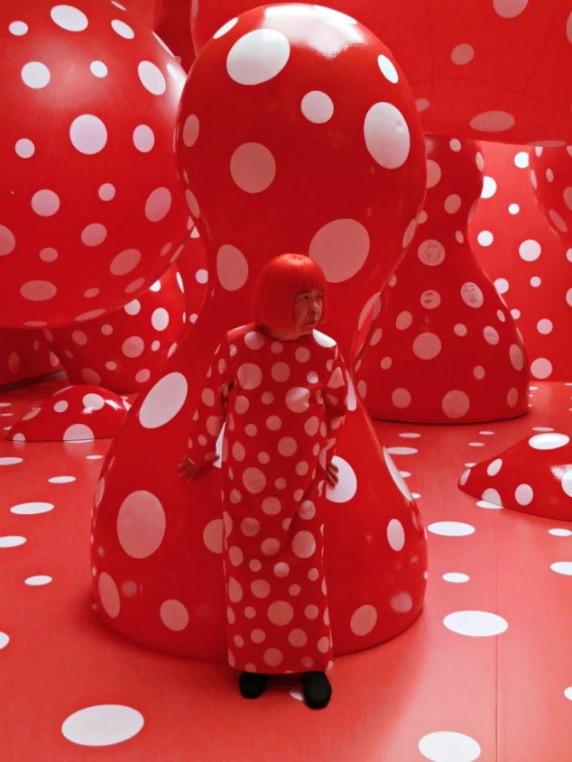
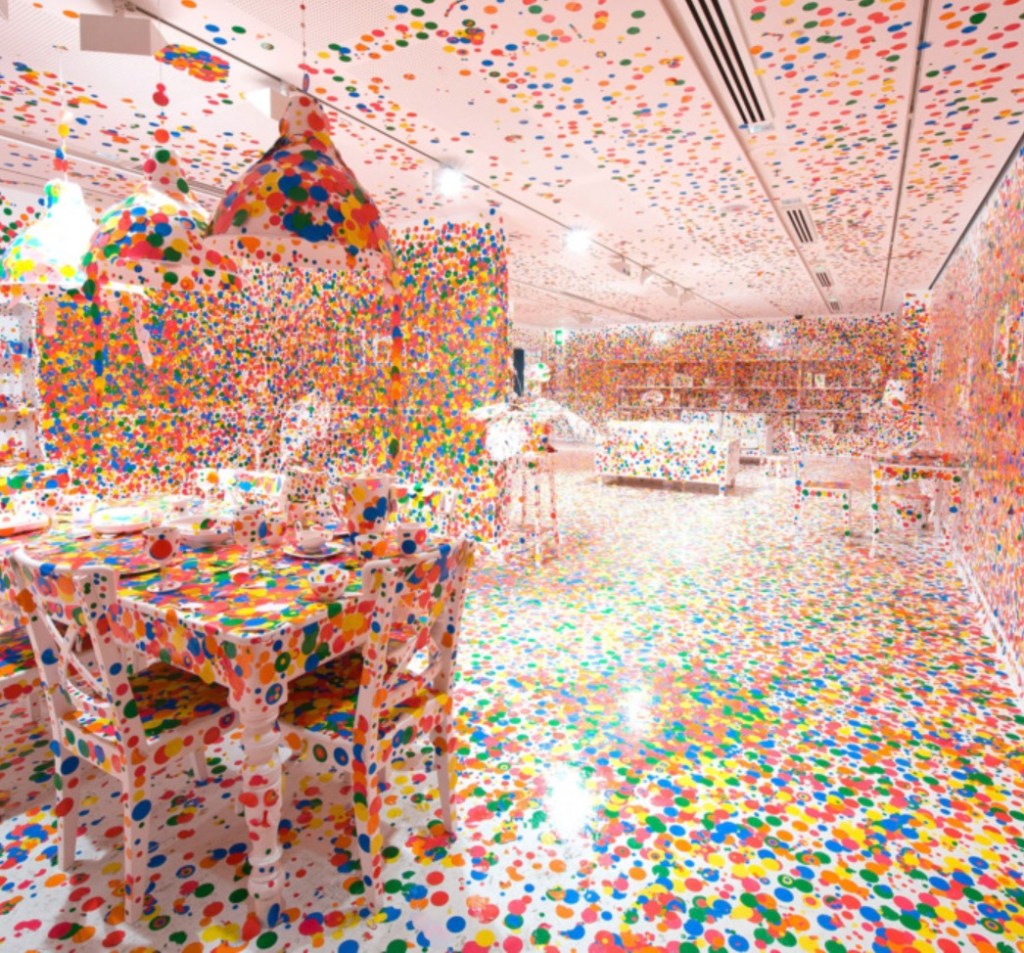
The art exhibition“Yayoi Kusama and Takashi Murakami joint Art Collection” was presented on September 22nd in a shopping mall located in Shanghai’s central area. Visitors can experience several rooms with bright backgrounds decorated with an intensive spotted pattern, a classical feature of Yayoi Kusama’s artworks. Moreover, the exhibition also presented artists’signed artworks. However, Yayoi Kusama and Takashi Murakami claimed that they never joined this exhibition and created those artworks.

Nihon keizai shinbunJapan Economic Newsand several other Japanese well-known media reported that: “since this year’s April, this kind of fake exhibition already appeared in four Chinese cities, including Shenzhen, Guangzhou, Wuhan and Shanghai.” As the investigation went further, the similar exhibitions were also found in other Chinese cities, for instance, Tianjin, Qingdao, Changsha, Xinjiang, Zibo, Chongqing and Suzhou. Some were the Yayoi Kusama’s solo exhibitions, while some are joint exhibitions of Yayoi Kusama and Takashi Murakami.

When the news came out, both the Japanese artists and Chinese audience were angry and disappointed towards the exhibition organizers. Regarding this news, Yayoi Kusama said: “when I heard that some fake artworks were exhibited in Chinese several places and lots of people believed it and went to see those exhibitions, I was totally shocked. I have contributed all my life to the art creation, but my work was presented to the public in a wrong way. It is an extremely frustrating thing. To Chinese audience and also to the world, please stop this kind of fake art exhibitions, and please appreciate my real work by your eyes. I am sincerely hoping that we can overcome this kind of difficulties and create a better world.”

On the other side, this news was widely spread in Chinese social media and people were discussing about it. The most popular comment regarding this news is: 我可能看了个假展(I may visit a fake exhibition). This sentence was originated from some similar Internet popular phrases. Chinese people were used this expression to show the mixed emotion of irony and resigned. Visitors were angry for this deliberate deception behaviors. Some of the exhibitions were free entry, while others needed admission tickets, which were sold on two biggest ticket selling websites. Moreover, the exhibition organizer even promoted the exhibition in the underground stations. Lots of people were totally deceived until saw the news.

Currently, Yayoi Kusama and Takashi Murakami have urged the exhibitions to stop and plan to sue the organizers for violating their rights. The reason why these fake exhibitions were firstly organized is that the reputation of these two artists would have attracted people and the shopping mall, along with the exhibition organizers,  would have benefitted from this improved turnout. Kusama’s and Murakami’s artworks are colorful and easy to understand, making them perfect for visitors who want to take photos and share them on social media.  As a consequence, the shopping mall has extra customers and can link its brand to the art world, while the exhibition organizers earn money from the admission fees and from the shopping malls hosting the show.

The past 30 years were golden years for the Chinese economy. The average growth rate for China was around 9.6%, while for the ideal growth rate for a country’s GDP growth is 2-3% from the international standard. In other words, the growth of Chinese economy was much faster than average. On average, every Chinese’s income will double every 7-8 years. Moreover, in the past 30 years, a Chinese family’s income more than tripled. Along with the fast income growth, Chinese also are receiving tons of information from other countries. The number of Chinese students choosing to go aboard is breaking the record every year. For example, in the UK (one of the popular aboard study destinations for Chinese students) almost one-third of non-EU students are Chinese. I believe that China knows more about the world than the world knows about China. Chinese people are actively committed to visit and know about foreign countries, especially developed countries like US, UK, Japan, Korean and European countries. China, having experienced an economic boom later with respect to other countries, is driven by the former sense of crisis to know and understand the rules of the game. At the same time, the world is shifting from the Second Industrial Revolution to the information revolution due to the fast growth of technology occurred in the past years.

To conclude, Chinese people are experiencing remarkable changes in social and economic aspects of their lives. Everything is speeding up, opportunities are everywhere, and at the same time the environment is less-regulated. The result is an uncertain social environment, where choosing to be the first-mover is a wise thing to do. Being the first-mover allows to set the rules for these new and improved markets. Therefore, even if one made a mistake (e.g. organizing a fake exhibition), revenues were still earned. Furthermore, it is unlikely to face harsh consequences because market is less-regulated and having no case law to rely on slows down possible lawsuits. After analyzing the Yayoi Kusama and Takashi Muramaki case along with the assessment on the overall situation, most people might choose to take the risk, as the revenues seem to be certain while facing consequences is just a remote possibility.

Lou Yilun